

Cart

Your cart is empty

Continue shopping

Trending searches

Featured products

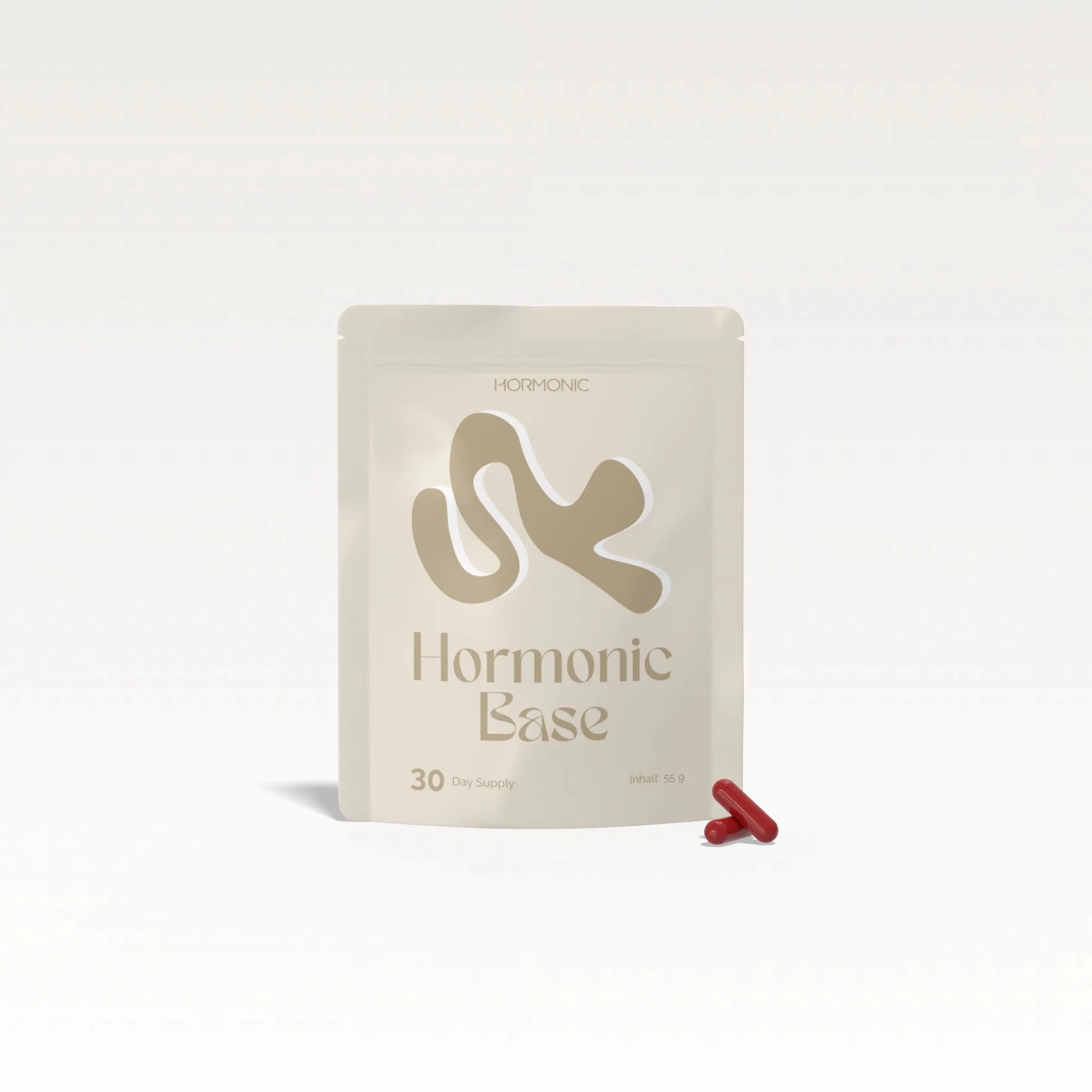
Hormonic Base - Hormonic - Nahrungsergänzungsmittel
Sale price€65,00
(5.0)
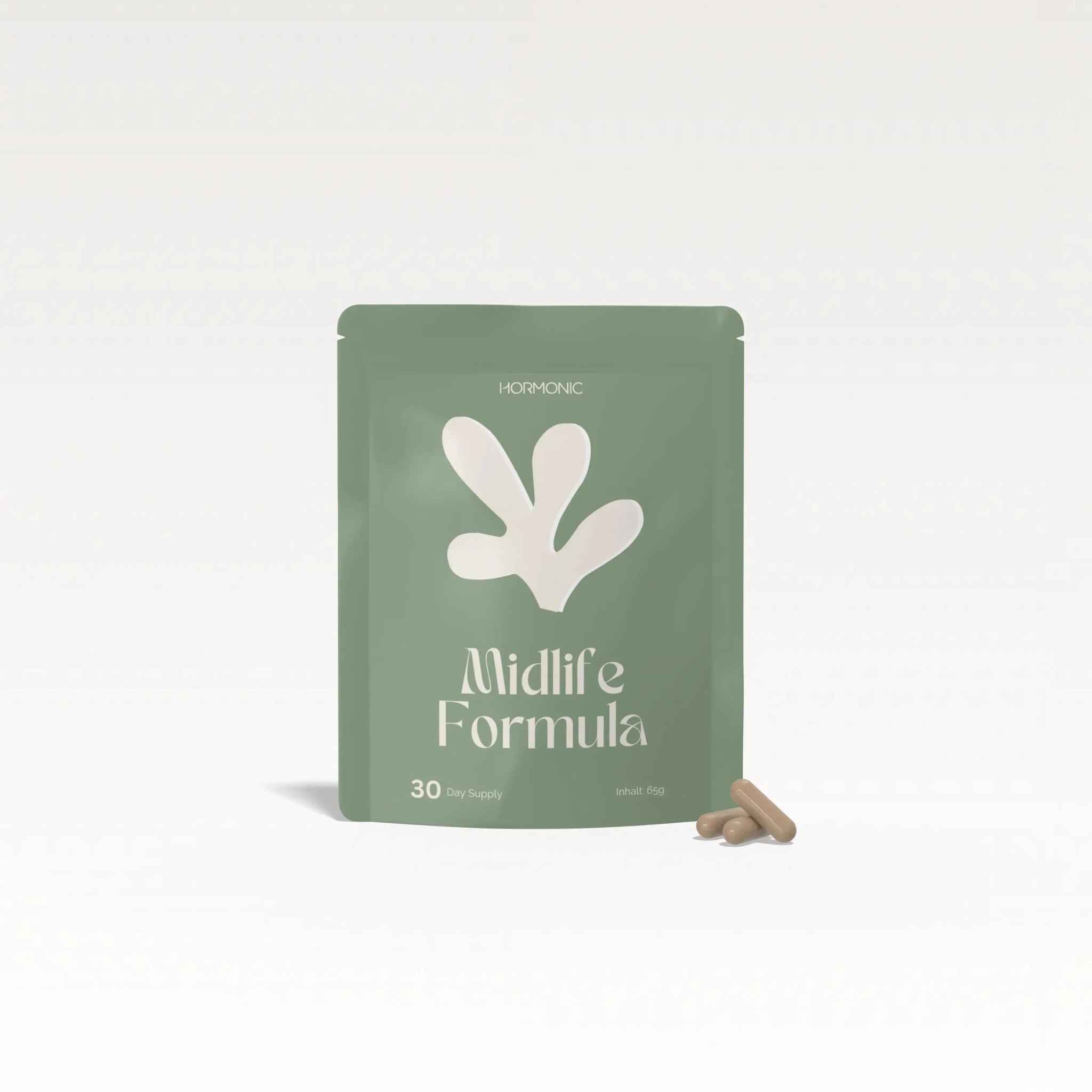
Midlife Formula - Hormonic - Nahrungsergänzungsmittel
Sale price€75,00
(5.0)
Junge Frau in gemütlicher Loungewear macht sich abends bei warmem Lampenlicht bettfertig
ZyklusSep 12, 20268 min read

Sleep problems before your period: why you sleep worse

Dieser Artikel ist Teil von: The Menstrual Cycle: The 4 Phases, Hormones, and What's Normal

Suddenly sleeping poorly, tossing and turning restlessly, waking up more often in the week before your period: Many women know this feeling, and there's a real reason for it. This article honestly explains why sleep suffers in the second half of the cycle and what truly helps.

The Most Important Points at a Glance

  • Many women sleep worse in the days leading up to their period. This is part of premenstrual symptoms and usually disappears with the onset of bleeding.
  • A key reason is the slightly elevated body temperature in the second half of the cycle, as the body needs to release heat to fall asleep.
  • Additionally, there's a drop in progesterone, which has a calming effect, just before the period.
  • To be honest: the feeling of sleeping poorly is real, but measurements often show only small changes.
  • A cool bedroom, consistent sleep times, and a calm approach to stress help the most. If severe emotional distress is present, PMDD might be the underlying cause.

I know this pattern well: For two weeks, you sleep normally, and then, just before your period, it gets restless. You toss and turn, wake up more often, and feel exhausted in the morning. This isn't imagination; it's related to your cycle. I want to calmly and honestly explain what's behind it and what you can do, without making you feel guilty.

Did you know?

In the second half of your cycle, your core body temperature rises by about 0.3 to 0.5 degrees Celsius, and the nocturnal cooling is less pronounced. Since the body needs to release heat to fall asleep and achieve deep sleep, this is one of the most tangible reasons why sleep feels less restorative before your period.

Why You Sleep Worse Before Your Period

After ovulation, progesterone levels rise. It promotes sleep through a calming neurotransmitter in the brain, but at the same time, it increases body temperature. This slightly elevated temperature with dampened nocturnal cooling makes sleep more superficial. Just before the period, progesterone then drops sharply, and with it, the calming effect, which can lead to more wakefulness. The melatonin and day-night rhythm also change slightly throughout the cycle.

To be honest: this is the plausible explanation, but not a process proven in every detail. An interesting point that many guidebooks omit: when sleep is measured in a lab, the changes in the second half of the cycle are often surprisingly small, even though sleep subjectively feels significantly worse. So, your perception is real and should be taken seriously, even if the measured values appear less dramatic. If you generally wake up at night and can't fall back asleep, you'll find more strategies in the article on waking up at night.

The Connection to PMS and PMDD

Sleep problems during this phase are part of premenstrual syndrome and typically subside one to two days after the onset of bleeding. This cycle dependence is precisely what distinguishes them from a persistent sleep disorder. You can read more about the overall symptom picture in the article on PMS.

It's important to distinguish it from more severe conditions: in premenstrual dysphoric disorder, or PMDD, a sleep disorder is a core symptom and is accompanied by severe emotional distress. If your sleep problems before your period are accompanied by pronounced irritability, depressed mood, or anxiety, a closer look is worthwhile, which we describe in the article on PMDD.

What really helps, honestly sorted

The smartest lever addresses temperature directly: a cool bedroom, light bedding, and a cool room of about 18 degrees directly counteract the cyclical warmth. In addition, there are the tried and tested basics: fixed sleep and wake-up times, daylight in the morning, and consciously less alcohol and late coffee during the critical days before the period, because both further disrupt sleep. Regular exercise also improves overall sleep.

For persistent sleep problems, cognitive behavioral therapy for sleepis the most proven method. A simple component of this: If you lie awake for a long time, it's better to get up briefly and only go back to bed when you're tired, instead of tossing and turning. And if the premenstrual symptoms are severe overall, there are effective medical treatments for PMS and PMDD that can also improve sleep. This then belongs in the hands of a doctor.

Nutrients: Magnesium and Vitamin B6, honestly classified

When it comes to nutrients, honesty is worthwhile. Magnesiumcontributes to the normal function of the nervous system, normal psychological function, and the reduction of fatigue, and Vitamin B6to the regulation of hormonal activity. Both are useful building blocks in the premenstrual context. However, the data situation specifically for sleep is weak, and no nutrient is a sleeping pill. An important safety note for B6: In high doses and over a long period, it can damage the nerves, which is why moderate amounts are important.

In short: Nutrients can support the framework, but the real difference is made by a cool bedroom, fixed times, a calm approach to stress, and, in cases of severe symptoms, the treatment of underlying PMS or PMDD.

Hormonic Base: Magnesium and B6 as the Foundation

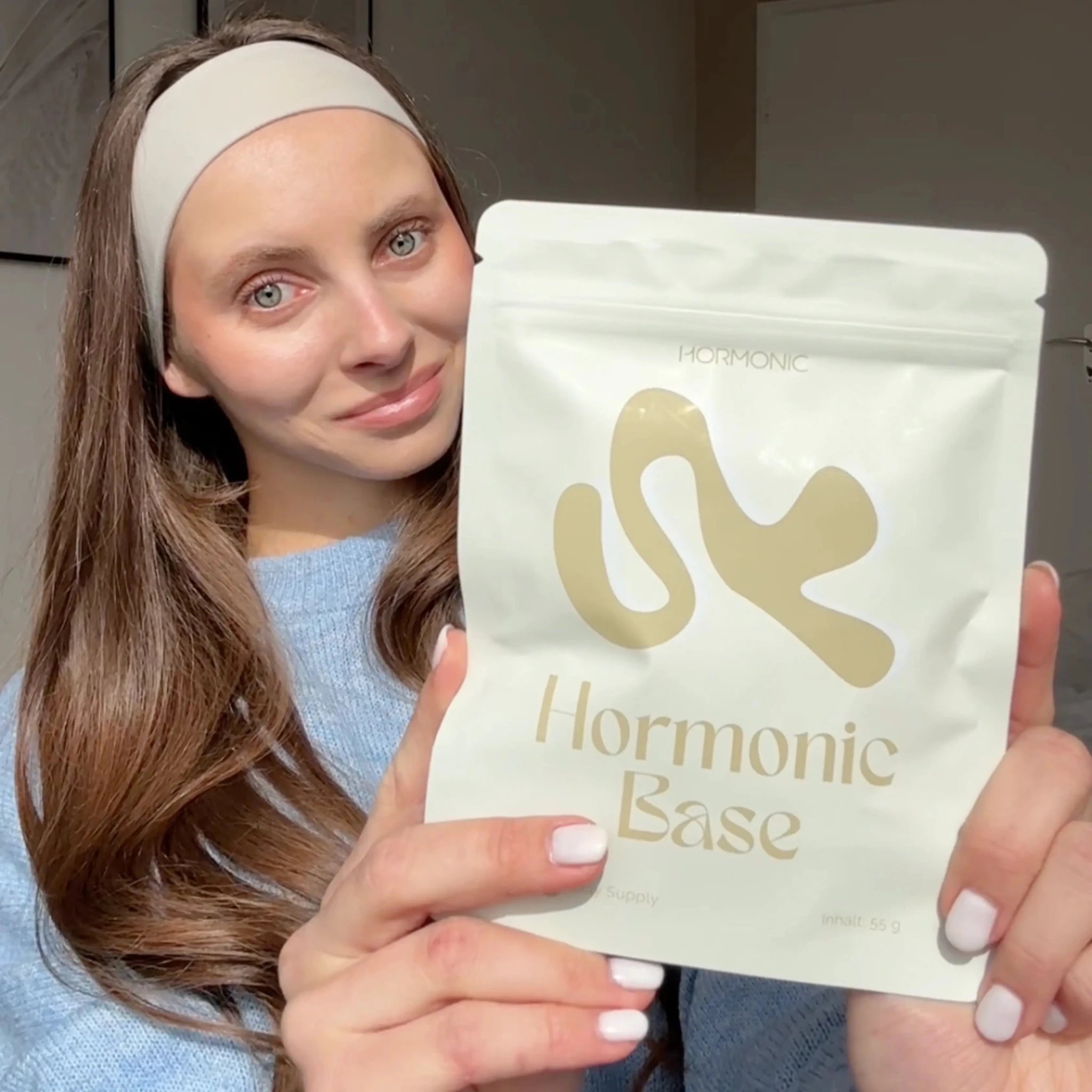
Two nutrients investigated in the premenstrual context are also found in Hormonic Base: Magnesium, which contributes to the normal functioning of the nervous system and normal psychological function, and Vitamin B6, which contributes to the regulation of hormonal activity. Frankly, the evidence specifically regarding sleep is weak, so Base is not a sleeping aid, but rather a calm daily foundation alongside a cool bedroom and consistent timings.
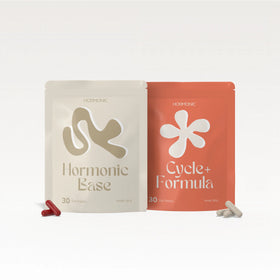
Discover Hormonic Base

When to seek help

You should have your sleep problems checked by a doctor if they are accompanied by severe emotional symptoms, i.e., pronounced irritability, low mood, anxiety or even feelings of hopelessness, which only occur in the second half of the cycle. This could indicate PMDD, which is treatable. Sleep problems that are no longer cycle-dependent but are persistent, as well as indications of sleep apnea or nocturnal leg movements, often caused by an iron deficiency, are also worth investigating.

This is no cause for concern, but rather the path to targeted help. If you are unsure how to classify your cycle-dependent sleep problems, you can discuss this in a free initial consultationwith one of our doctors, without any obligation.

Always sleep poorly before your period?

Do your sleep problems return every cycle, or are severe emotional issues added to them? In a free 15-minute consultation, one of our doctors will assess your situation, with no obligation.

Secure your free initial consultation

Conclusion

Poor sleep before your period is a real, cyclical pattern: In the second half of the cycle, body temperature rises, the nightly cool-down is less pronounced, and the calming progesterone drops shortly before your period. Both make sleep more superficial. Honestly, it often feels worse than it can be measured, and it usually gets better again when bleeding starts.

The most effective measures are a cool bedroom, fixed bedtimes, less alcohol and coffee during the critical days, and a calm approach to stress. Nutrients like magnesium and vitamin B6 can support the framework but are not sleeping pills. And if severe emotional symptoms occur, it's worth looking into PMDD. With this knowledge, you can better navigate the days before your period.

Frequent questions about sleep problems before your period

Why do I sleep so poorly before my period?

Because in the second half of your cycle, your basal body temperature slightly increases and your body cools down less at night. Since the body needs to release heat to fall asleep, sleep becomes shallower. Just before your period, the calming progesterone also drops, which can lead to more waking phases. This is part of the premenstrual symptom complex and usually improves with the onset of bleeding.

What helps with sleep problems before your period?

The most effective remedies are a cool bedroom, which counteracts the cyclic warmth, as well as regular bedtimes and wake-up times, daylight in the mornings, and reduced alcohol and coffee consumption in the days leading up to the period. For persistent problems, cognitive-behavioral therapy for sleep is the most evidence-based approach. Magnesium and vitamin B6 can support the overall process, but are not sleeping aids. In cases of severe psychological distress, PMDD should be medically evaluated.

Ist schlechter Schlaf ein PMS-Symptom?
Ja. Schlafprobleme gehören zum prämenstruellen Syndrom und treten typischerweise in den Tagen vor der Periode auf, um dann ein bis zwei Tage nach Beginn der Blutung wieder abzuklingen. Diese Zyklusabhängigkeit unterscheidet sie von einer dauerhaften Schlafstörung. Bei der stärkeren Form, der prämenstruellen dysphorischen Störung (PMDS), ist die Schlafstörung sogar ein Kernsymptom und geht mit ausgeprägten seelischen Beschwerden einher.
Hilft Magnesium beim Schlaf vor der Periode?
Nur begrenzt. Magnesium trägt zu einer normalen Funktion des Nervensystems, zur normalen psychischen Funktion und zur Verringerung von Müdigkeit bei und ist im prämenstruellen Kontext ein sinnvoller Baustein. Speziell zum Schlaf ist die Studienlage aber schwach, und Magnesium ist kein Schlafmittel. Am meisten bringen ein kühles Schlafzimmer, feste Zeiten und ein ruhiger Umgang mit Stress.

Scientific Sources

  • Baker, F. C. et al. (2012). Sleep and 24-hour body temperatures across the menstrual cycle. Sleep Med, 13(9), 1071-1078. PMID: 22749440
  • Baker, F. C., Driver, H. S. (2007). Circadian rhythms, sleep, and the menstrual cycle. Sleep Med Clin, 2(4), 613-622.
  • Shechter, A., Boivin, D. B. (2010). Sleep, hormones, and circadian rhythms throughout the menstrual cycle. Int J Endocrinol, 2010, 259345.
  • Baker, F. C. et al. / Sleep disturbance in PMDD (2021). Int J Environ Res Public Health, 18(12), 6192. PMC8230179.
  • Trauer, J. M. et al. (2015). Cognitive Behavioral Therapy for Chronic Insomnia. Ann Intern Med, 163(3), 191-204. doi:10.7326/M14-2841
  • Wyatt, K. M. et al. (1999). Efficacy of vitamin B6 in the treatment of premenstrual syndrome: systematic review. BMJ, 318(7195), 1375-1381.
  • EFSA NDA Panel (2023). Tolerable upper intake level for vitamin B6. EFSA Journal, 21(5), e08006. doi:10.2903/j.efsa.2023.8006
  • Regulation (EU) No 432/2012; EFSA Journal 2010;8(10):1807 (Magnesium) and 2009;7(9):1225 (Vitamin B6, regulation of hormonal activity).

About the Author

Lee Paulina Pape

Lee Paulina Pape

Founder · MSc Psychology · Hormonic

Lee is a psychologist (MSc) and co-founder of Hormonic. As CEO, she makes women's hormonal health understandable and accessible.

Note: This article is based on current guidelines and scientific work (as of 2026). It is for informational purposes only and does not replace medical advice, diagnosis, or treatment.

Share

You might also be interested in this.

Nachts aufwachen und nicht mehr einschlafen: was Frauen hilft - Hormonic
SchlafJul 19, 20268 min read
Waking up at night and not being able to fall back asleep: what helps women

Awake at night and can't get back to sleep? Why women wake up, why the cortisol myth is flawed, what you should check, and what really helps.

Ursachen, Symptome und Behandlungsmöglichkeiten für PMS - Hormonic
ZyklusMay 27, 20269 min read
Causes, symptoms and treatment options for PMS

From symptoms to the real causes and treatment: the evidence-based overview of PMS, including the remedies with the best scientific evidence.

PMDS: Symptome, Ursachen und was wirklich hilft - Hormonic
ZyklusJul 2, 20269 min read
PMDD: Symptoms, Causes, and What Really Helps

PMDD is more than severe PMS: the intense, mood-related form of premenstrual discomfort. Learn what happens in the body, how to recognize PMDD, and what studies show truly helps.