

Offer ends in10:00

Cart

Your cart is empty

Continue shopping

Trending searches

Featured products

Hormonic Base - Hormonic - Nahrungsergänzungsmittel
Sale price€65,00
(5.0)
Midlife Formula - Hormonic - Nahrungsergänzungsmittel
Sale price€75,00
(5.0)
Schokoladenzyste einfach erklärt: halbierte Feigen, Kakaonibs und Walnüsse auf hellem Leinen
EndometrioseOct 13, 202610 min read

Chocolate cyst (endometrioma): symptoms, treatment and fertility

This article is part of: Endometriosis: Symptoms, Causes, and What Really Helps

"There's a chocolate cyst, let's keep an eye on it." Women come to our initial consultations again and again with a sentence like this and an ultrasound image on their phone, often in their mid-30s. Many are planning a pregnancy in the next few years. The questions come pouring out: Is it dangerous? Does it have to come out? And what does it mean for my eggs?

For many women, a chocolate cyst is the first concrete sign of endometriosis, sometimes found by chance. And few findings raise so many questions so quickly, especially if you are trying to conceive. The good news first: there is a lot to be said for a calm, well-planned approach.

What is a chocolate cyst?

A chocolate cyst is a cyst on the ovary that is filled with old blood and caused by endometriosis. Unlike a corpus luteum cyst or a follicular cyst, it does not simply disappear with the next cycle, probably because the tissue inside it becomes active again with every period.

Exactly how an endometrioma forms has not been fully explained. One theory is that endometriosis tissue reaches the surface of the ovary and folds inward there. With every period it bleeds a little into the cavity, and the blood cannot drain away and thickens. Iron also builds up this way, which research links to oxidative stress in the ovary. Oxidative stress describes an imbalance between reactive oxygen species and the cell's protective systems.

An endometrioma is often not the only site of endometriosis. That is why the German S2k guideline calls for an ultrasound check of the kidneys whenever ovarian endometriosis or deep endometriosis is suspected, because lesions can narrow the ureter (Burghaus et al., 2026).

What symptoms does a chocolate cyst cause?

A chocolate cyst can cause typical endometriosis symptoms such as severe period pain, lower abdominal pain and pain during sex, but it can also go completely unnoticed. Some are found by chance during a routine ultrasound or during fertility testing.

The symptoms often also depend on where else endometriosis is present. If you are unsure which symptoms are typical, our overview of endometriosis diagnosis can help.

Chocolate cyst: monitoring, medication or surgery?

The right path depends on your symptoms, the size and appearance of the cyst, your age and whether you are trying to conceive. The European guideline does not set a fixed size above which surgery is required.

Option When it may be an option What to keep in mind
Monitoring No or mild symptoms, unremarkable ultrasound Regular checks of cyst size and ovarian reserve
Hormone therapy Pain, not currently trying to conceive Can shrink the cyst (dienogest by about 1.3 cm on average) but does not remove it
Surgery Severe pain, unclear ultrasound, rapid growth Cystectomy is the standard, but it can lower ovarian reserve
Sclerotherapy Selected cases, after consulting a specialized center Little studied, not a standard, not available everywhere

The figure for hormone therapy comes from a meta-analysis in which dienogest reduced the diameter of endometriomas by 1.3 cm on average and combined pills by 1.1 cm (Eberle et al., 2024). You make the decision together with your gynecologist, and if you are trying to conceive, ideally together with a fertility clinic as well.

With a chocolate cyst, the most important question is rarely "Does it have to come out?" but "What matters most to me right now: being free of pain, getting pregnant, or both?"
How is a chocolate cyst diagnosed?

A chocolate cyst is diagnosed with a transvaginal ultrasound, plus an MRI if the findings are unclear. There is no blood test that can detect an endometrioma.

On ultrasound, an endometrioma typically looks like a round cyst with evenly cloudy contents, which doctors describe as "ground glass". At an Israeli center with experienced examiners, ultrasound correctly identified 98.9% of endometriomas, but for cysts that turned out not to be endometriomas it was right in only 64% of cases (Cohen Ben-Meir et al., 2021). The most common look-alike is a corpus luteum cyst with bleeding inside, which can look exactly the same but usually disappears within one or two cycles. That is why a follow-up scan after your next period is a common step.

According to the guideline, the blood marker CA-125 is not specific enough for diagnosis. The AMH level (anti-Müllerian hormone), on the other hand, does not show the cyst but your remaining egg reserve, and it is especially useful before possible surgery and if you are trying to conceive. We explain what this value can and cannot tell you in our article on egg reserve and AMH levels.

How does surgery for a chocolate cyst work?

If surgery is needed, it is done by laparoscopy, and the European guideline recommends removing the cyst together with its capsule (cystectomy) rather than only opening and cauterizing it, because it then comes back less often and less pain remains (ESHRE, 2022).

At the same time, the guideline calls for a particularly gentle technique to protect the ovary. According to a guide from the Endometriosis Research Foundation (Stiftung Endometriose-Forschung), laser vaporization is mainly an option when egg reserve is low or after a recurrence. A still little-studied alternative is sclerotherapy, in which the cyst is drained with a needle and rinsed with alcohol. In an overview of nine reviews, it did not come back more often than after cystectomy, and AMH levels stayed stable on average, but the quality of the data was low (Younis et al., 2025). It is not a standard treatment and is not available everywhere.

After cystectomy, an endometrioma comes back in about 30 to 50% of women over the long term (Wattanayingcharoenchai et al., 2021). The European guideline recommends long-term hormone therapy after surgery for women who are not currently trying to conceive. In cohort studies it clearly lowered the risk of recurrence, but in the randomized trials so far the effect was not clear-cut.

Is a chocolate cyst dangerous?

In the vast majority of cases, a chocolate cyst is benign. Endometriosis is linked to a higher relative risk of certain types of ovarian cancer, but the absolute risk remains low.

A large meta-analysis found an about 1.9-fold higher risk of ovarian cancer with endometriosis, mainly for clear cell and endometrioid tumors (Kvaskoff et al., 2021). For context: the lifetime risk of ovarian cancer in Germany is about 1 in 74, or roughly 1.35% (ZfKD, RKI). A rough calculation gives about 2.6% with endometriosis, or roughly 1 in 38. There is no exact figure for endometriomas alone. The European guideline therefore does not recommend any extra cancer screening beyond the usual programs.

Have it checked more closely by a doctor if a cyst grows quickly, shows solid parts or parts with blood flow on ultrasound, appears for the first time after menopause, or if the findings remain unclear. In that case, surgery with a tissue examination is usually the right way forward.

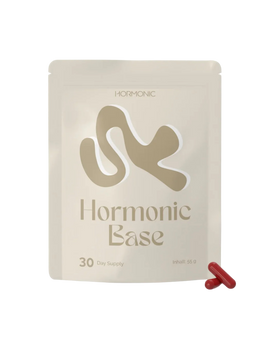
Hormonic Base: Your daily essential support

Zinc and selenium contribute to the protection of cells from oxidative stress, and zinc contributes to normal fertility and normal reproduction. Hormonic Base combines both with folate and vitamin D in a formula of 16 micronutrients. A daily foundation, developed by doctors.

Start now

Chocolate cyst and fertility: what AMH, surgery and IVF mean

A chocolate cyst does not rule out pregnancy, and according to the European guideline it is not routinely removed before fertility treatment. For your egg reserve, the most critical point is usually not the cyst itself but the surgery.

A meta-analysis of 783 women showed that AMH levels dropped by 39.5% on average after removal of a cyst on one side and by 57% after surgery on both sides, and they were still lower after 9 to 12 months (Younis et al., 2019). Whether the cyst alone already lowers egg reserve is less clear, as the studies contradict each other (Younis & Taylor, 2024).

For IVF, the data are reassuring: in a meta-analysis of mostly retrospective studies, the live birth rate with an endometrioma was as high as without one, although slightly fewer eggs were retrieved on average and treatment cycles were cancelled more often. Surgery before IVF did not increase the live birth rate (odds ratio 0.90) (Hamdan et al., 2015). The European guideline therefore advises against routine surgery before fertility treatment and considers surgery useful mainly when there is pain or when the cyst gets in the way of egg retrieval (ESHRE, 2022). With extensive endometriosis on the ovaries, egg freezing can also be discussed, although how much it helps is still unclear. You can read more in our article on endometriosis and trying to conceive.

Oxidative stress and micronutrients: what the evidence shows

There is no evidence that micronutrients shrink an endometrioma or protect egg reserve. They can, however, be part of a good nutritional foundation, especially if you are thinking about having children.

In the fluid surrounding the eggs, researchers found more iron in women with advanced endometriosis than in women without endometriosis, and lab experiments suggest this could interfere with egg maturation (Li et al., 2020). Whether this applies to humans is still open. A meta-analysis of 21 randomized trials on antioxidants for endometriosis found less pelvic pain overall, but no effect on the pregnancy rate. In the vitamin subgroup, which also included vitamin D, there was no significant effect on pain, and there were no randomized trials for NAC, coenzyme Q10, curcumin, zinc or selenium (Zhong et al., 2025).

What can be said, independently of endometriosis: zinc and selenium contribute to the protection of cells from oxidative stress, and zinc contributes to normal fertility and normal reproduction. Vitamin D contributes to the normal function of the immune system. NAC was studied in an observational study of 120 women, in which the cysts measured 33.0 instead of 36.5 mm on average after three months. Without a comparison group, however, it is impossible to say whether this was due to NAC (Anastasi et al., 2023). You can find the details and the older studies in our article on NAC for endometriosis.

Coenzyme Q10 has been well studied in the fertility context. In a randomized trial of 169 young women with diminished ovarian reserve, taking 600 mg of Q10 daily for 60 days led to more eggs being retrieved during IVF and fewer cancelled transfers (Xu et al., 2018), and a meta-analysis of six randomized trials found more clinical pregnancies (Lin et al., 2024). There are no studies specifically in women with endometriomas so far, and the dose was well above what supplements usually contain.

Your diet also plays a role: in an observational study of 244 women undergoing fertility treatment, women under 35 who followed a Mediterranean diet most closely had a live birth more often, but this does not prove cause and effect (Karayiannis et al., 2018). Important before fertility treatment: discuss every supplement with your fertility clinic. For example, a small retrospective study suggests that resveratrol might be unfavorable around the time of embryo transfer (Ochiai et al., 2019).

When you need medical help right away

Sudden, very severe pain on one side of the lower abdomen, pain with nausea, vomiting or fever, and feeling faint or lightheaded can be signs that a cyst has ruptured or that the ovary has twisted. This is an emergency, so please go straight to the emergency room.

If you would like to sort out your questions before your next check-up, you can do that in a free initial consultation. Medical questions about your findings are answered by your gynecologist.

For more in-depth support, our doctor-led video hormone consultation gives you time to calmly put your findings, your AMH level and your plans to conceive into context before possible surgery, and to align your supplements with fertility treatment. Whether to monitor or operate is decided by your gynecologist and your fertility clinic.

At a glance

  • Have a chocolate cyst checked regularly by ultrasound, and ask about your AMH level if surgery is being considered.
  • Bring up your wish to conceive early, ideally with a fertility clinic.
  • Take rapid growth, unclear findings and sudden severe pain seriously.

Got your results and have lots of questions?

An endometrioma on an ultrasound raises questions, especially when you are thinking about having children. In a free 15-minute initial consultation, our doctors will help you determine which questions to take with you to your practice or fertility clinic, and discuss your cycle and micronutrients. Whether to monitor or operate is decided by your treating team.

Book your free consultation

Conclusion

A chocolate cyst is a form of endometriosis on the ovary, which is usually benign and does not automatically require surgery. Whether observation, hormone therapy, or surgery is the right approach depends on your symptoms, the ultrasound scan, and your plans.

Especially if you are trying to conceive, it is worth taking a calm look at the data: to date, the cyst itself does not reduce the birth rate in IVF, whereas surgery can reduce the ovarian reserve. Therefore, make your decision together with your practice and a fertility center. You can find an overview of endometriosis and all treatment options in our Endometriosis Guide.

Frequently asked questions about chocolate cysts

What can you do about a chocolate cyst?

That depends on your symptoms, the ultrasound findings and whether you are trying to conceive. If you have no symptoms, regular monitoring may be enough. If you have pain, hormone therapy may be an option, which can shrink the cyst. With severe pain, unclear findings or rapid growth, the cyst is usually removed by laparoscopy.

Can chocolate cysts go away on their own?

There are hardly any reliable figures on how often an endometrioma shrinks without treatment. Unlike a corpus luteum cyst, it usually does not disappear within a few cycles, presumably because the tissue becomes active again with every period. Hormone therapy can shrink the cyst, surgery removes it.

Is a chocolate cyst dangerous?
Usually not. In the vast majority of cases, a chocolate cyst is benign. Endometriosis is linked to an about 1.9-fold higher relative risk of certain types of ovarian cancer, but the absolute risk remains low. Rapid growth, solid parts on ultrasound or a new cyst after menopause should be checked more closely.
Can a chocolate cyst be seen on an MRI?
Yes. The first step is a transvaginal ultrasound, and if it is not conclusive, the S2k guideline recommends an MRI as the second method. An MRI also helps detect deep endometriosis around the ovary and plan possible surgery.

Scientific Sources

  • Becker CM, Bokor A, Heikinheimo O, et al. (2022). ESHRE guideline: endometriosis. Human Reproduction Open 2022(2):hoac009. doi:10.1093/hropen/hoac009
  • Burghaus S, Schäfer SD, Ulrich UA, et al. (2026). Diagnosis and Therapy of Endometriosis. Guideline of the DGGG, OEGGG and SGGG (S2k-Level, AWMF Registry No. 015/045, April 2025). Geburtshilfe und Frauenheilkunde 86(2):133-188. doi:10.1055/a-2760-4867
  • Muzii L, Galati G, Mattei G, et al. (2023). Expectant, Medical, and Surgical Management of Ovarian Endometriomas. Journal of Clinical Medicine 12(5):1858. doi:10.3390/jcm12051858
  • Younis JS, Shapso N, Fleming R, Ben-Shlomo I, Izhaki I (2019). Impact of unilateral versus bilateral ovarian endometriotic cystectomy on ovarian reserve: a systematic review and meta-analysis. Human Reproduction Update 25(3):375-391. doi:10.1093/humupd/dmy049
  • Younis JS, Taylor HS (2024). The impact of ovarian endometrioma and endometriotic cystectomy on anti-Müllerian hormone, and antral follicle count: a contemporary critical appraisal of systematic reviews. Frontiers in Endocrinology 15:1397279. doi:10.3389/fendo.2024.1397279
  • Hamdan M, Dunselman G, Li TC, Cheong Y (2015). The impact of endometrioma on IVF/ICSI outcomes: a systematic review and meta-analysis. Human Reproduction Update 21(6):809-825. doi:10.1093/humupd/dmv035
  • Kvaskoff M, Mahamat-Saleh Y, Farland LV, et al. (2021). Endometriosis and cancer: a systematic review and meta-analysis. Human Reproduction Update 27(2):393-420. doi:10.1093/humupd/dmaa045
  • Eberle A, Bach Nguyen D, Papillon Smith J, et al. (2024). Medical management of ovarian endometriomas: a systematic review and meta-analysis. Obstetrics & Gynecology 143(1):53-66. doi:10.1097/AOG.0000000000005444
  • Wattanayingcharoenchai R, Rattanasiri S, Charakorn C, Attia J, Thakkinstian A (2021). Postoperative hormonal treatment for prevention of endometrioma recurrence after ovarian cystectomy: a systematic review and network meta-analysis. BJOG 128(1):25-35. doi:10.1111/1471-0528.16366
  • Younis JS, Shapso N, Izhaki I, Taylor HS (2025). Ethanol sclerotherapy for management of endometriomas: an overview of systematic reviews. Frontiers in Endocrinology 16. doi:10.3389/fendo.2025.1612899
  • Cohen Ben-Meir L, Mashiach R, Eisenberg VH (2021). External Validation of the IOTA Classification in Women with Ovarian Masses Suspected to Be Endometrioma. Journal of Clinical Medicine 10(13):2971. doi:10.3390/jcm10132971
  • Zhong Y, Qiao X, Huang X, et al. (2025). The effects of antioxidant supplementation on pain, oxidative stress markers, and clinical pregnancy rate in women with endometriosis: a systematic review and meta-analysis of randomized controlled trials. Frontiers in Medicine 12:1694281. doi:10.3389/fmed.2025.1694281
  • Li A, Ni Z, Zhang J, et al. (2020). Transferrin Insufficiency and Iron Overload in Follicular Fluid Contribute to Oocyte Dysmaturity in Infertile Women With Advanced Endometriosis. Frontiers in Endocrinology 11:391. doi:10.3389/fendo.2020.00391
  • Anastasi E, Scaramuzzino S, Viscardi MF, et al. (2023). Efficacy of N-Acetylcysteine on Endometriosis-Related Pain, Size Reduction of Ovarian Endometriomas, and Fertility Outcomes. International Journal of Environmental Research and Public Health 20(6):4686. doi:10.3390/ijerph20064686
  • Engel J, Bauer S, Buchweitz O, et al. Ovarian Endometriosis Guidelines. Endometriosis Research Foundation. endometriose-sef.de
  • Centre for Cancer Registry Data, Robert Koch Institute. Ovarian Cancer. krebsdaten.de
  • Xu Y, Nisenblat V, Lu C, et al. (2018). Pretreatment with coenzyme Q10 improves ovarian response and embryo quality in low-prognosis young women with decreased ovarian reserve: a randomized controlled trial. Reproductive Biology and Endocrinology 16:29. doi:10.1186/s12958-018-0343-0
  • Lin G, Li X, Jin Yie SL, et al. (2024). Clinical evidence of coenzyme Q10 pretreatment for women with diminished ovarian reserve undergoing IVF/ICSI: a systematic review and meta-analysis. Annals of Medicine 56(1):2389469. doi:10.1080/07853890.2024.2389469
  • Karayiannis D, Kontogianni MD, Mendorou C, et al. (2018). Adherence to the Mediterranean diet and IVF success rate among non-obese women attempting fertility. Human Reproduction 33(3):494-502. doi:10.1093/humrep/dey003
  • Ochiai A, Kuroda K, Ikemoto Y, et al. (2019). Influence of resveratrol supplementation on IVF-embryo transfer cycle outcomes. Reproductive BioMedicine Online 39(2):205-210. doi:10.1016/j.rbmo.2019.03.205

About the Author

Lisa Maria Emmer

Lisa Maria Emmer

Founder · Physician · Hormonic

Lisa Maria Emmer is co-founder and medical director at Hormonic. She supports women with hormonal problems every day and specializes in cycle health, PCOS, and menopause.

Note: This article is based on current guidelines and scientific work (as of 2026). It is for informational purposes only and does not replace medical advice, diagnosis, or treatment.

Share

You might also be interested in this.

NAC bei Endometriose: Wirkung, Studien und was es wirklich kann - Hormonic
EndometrioseJun 3, 20268 min read
NAC for Endometriosis: Effects, Studies, and What It Can Really Do

NAC is considered a supplementary measure for endometriosis. Here's an honest assessment of what studies show regarding pain, endometriomas, and fertility.

Endometriose und Kinderwunsch: Chancen und was wirklich hilft - Hormonic
EndometrioseJun 21, 202611 min read
Endometriosis and Desire to Have Children: Chances and What Really Helps

Endometriosis and the desire to have children are not mutually exclusive. How the disease affects fertility, what the chances are, and what truly helps according to guidelines and research.

Eizellreserve & AMH-Wert: Was er wirklich aussagt - Hormonic
DiagnostikJun 4, 20267 min read
Everything you need to know about your eggs and fertility

How many eggs do I have left? Your AMH level estimates your egg reserve. Find out what it really means, what it doesn't, and why the pill falsifies it.