

Offer ends in10:00

Cart

Your cart is empty

Continue shopping

Trending searches

Featured products

Hormonic Base - Hormonic - Nahrungsergänzungsmittel
Sale price€65,00
(5.0)
Midlife Formula - Hormonic - Nahrungsergänzungsmittel
Sale price€75,00
(5.0)
Aufgeblähter Bauch in den Wechseljahren: warum er wie schwanger aussieht - Hormonic
WechseljahreAug 19, 20269 min read

Bloated Belly During Menopause: Why It Looks Like Pregnancy

This article is part of: Perimenopause and Menopause: The Complete Medical Guide

There is that one moment in the evening that many women know: your pants fit comfortably in the morning, and now they feel tight across your stomach as if you had gained weight in a single day. In conversations, I have heard the same sentence over and over, half-joking, half-desperate: "I look like I'm four months pregnant, even though I'm barely eating differently than before." That is exactly what this is about.

A bloated belly during menopause that looks pregnant is surprisingly common, and it is usually not a question of discipline or calories. In midlife, your body is adjusting its hormones, and this has concrete physical consequences for your belly. No lecture on willpower, but a look at what is actually happening and what you can do about it.

Why does the belly look pregnant during menopause?

The belly looks pregnant during menopause primarily because it is actually distended: the lower abdomen protrudes due to gas, retained water, and slower digestion. This is true distension, not just weight gain. Furthermore, as estrogen levels drop, fat distribution shifts from the hips and buttocks to the center of the abdomen. Together, these factors create exactly the round, protruding shape that many describe as "looking pregnant."

What is typical: the protrusion is rarely the same all day long. The belly is often flat in the morning, fills up throughout the day, and is most pronounced in the evening. This fluctuation is a good sign that gas and water are the primary culprits, not just body fat. The following overview breaks down the most common causes.

Cause What happens in the body What helps
Gas and sluggish gut The gut moves slower, food remains longer, and more gas is produced. Soluble fiber, eating slowly, movement after eating.
Water retention Fluctuating estrogen causes the body to hold more fluid. Hydrating enough, movement, reducing salty processed food.
Constipation Slowed intestinal transit leads to hard stool and a feeling of pressure. More fiber and water, regular routine.
Hormonal shift Estrogen and progesterone fluctuate and affect the gut and sensitivity. Medical assessment, balanced diet, hormone therapy if necessary.
Altered fat distribution Fat is increasingly stored viscerally in the midsection. Strength training, protein, keeping blood sugar stable.

If you want to know how this distension differs from real, persistent belly fat and what helps against the deep visceral fat layer, you will find detailed information in our article on belly fat during menopause. Here, we stay focused on the question of why the belly bloats and looks "pregnant."
Hormonal Shift as a Trigger: Estrogen, Progesterone, and Your Gut

The main reason for a bloated belly lies in your hormone balance. During perimenopause, estrogen and progesterone fluctuate significantly and decline over time. This may sound abstract, but it has very concrete consequences for digestion, as your gut is full of receptors that react to precisely these hormones.

Estrogen influences how vigorously and regularly intestinal muscles contract. Progesterone has a relaxing effect on smooth muscles, including those in the digestive tract. When both hormones fluctuate irregularly, the gut loses its steady rhythm. Food is transported sometimes faster, sometimes significantly slower. If it remains in the gut longer, more gases are produced, and the abdomen protrudes. A review from 2026 summarizes that women in menopause react more sensitively to distension in the gut, and motility and gas formation change (Frontiers in Endocrinology, 2026). This is precisely why the same plate of food suddenly feels "heavier" than it did ten years ago.

Water Retention: Why Your Belly Feels Fuller

A second mechanism is water. Fluctuating estrogen can disrupt fluid balance, causing the body to retain more water in phases. You feel this not only in your fingers or legs but also as a feeling of tightness in your abdomen. These retentions come and go and partly explain why the belly appears significantly fuller in the evening than in the morning. We have compiled how to counteract this specifically in the article on Getting Rid of Water Retention.

Altered Fat Distribution: The Belly as a New Problem Area

As estrogen levels decline, where your body stores fat changes. Previously, it tended to store it on the hips and thighs; now, it increasingly stores visceral fat in the abdominal area, deep between the organs. An analysis of body composition during the transition shows that postmenopausal women carry more abdominal fat than before, even with the same total fat mass (Journal of Clinical Medicine, 2026). This visceral fat also pushes the abdominal wall forward. It is not the reason for daily fluctuations but accentuates the underlying protuberance, making bloating more visible.

Stress and Cortisol as Amplifiers

When stress is added, things often get worse. The stress hormone cortisol slows down digestion and diverts energy away from the gut. Persistent stress can thus intensify bloating and a sluggish feeling in the abdomen and also promotes the storage of visceral fat. The abdomen therefore reacts very directly to tension, which many women are familiar with from phases of little sleep or high pressure. A bloated belly is a common issue for women anyway, not just during menopause, as shown in the overview of Bloated Belly in Women. However, in midlife, hormonal triggers combine.

Midlife Formula for Hormonal Midlife

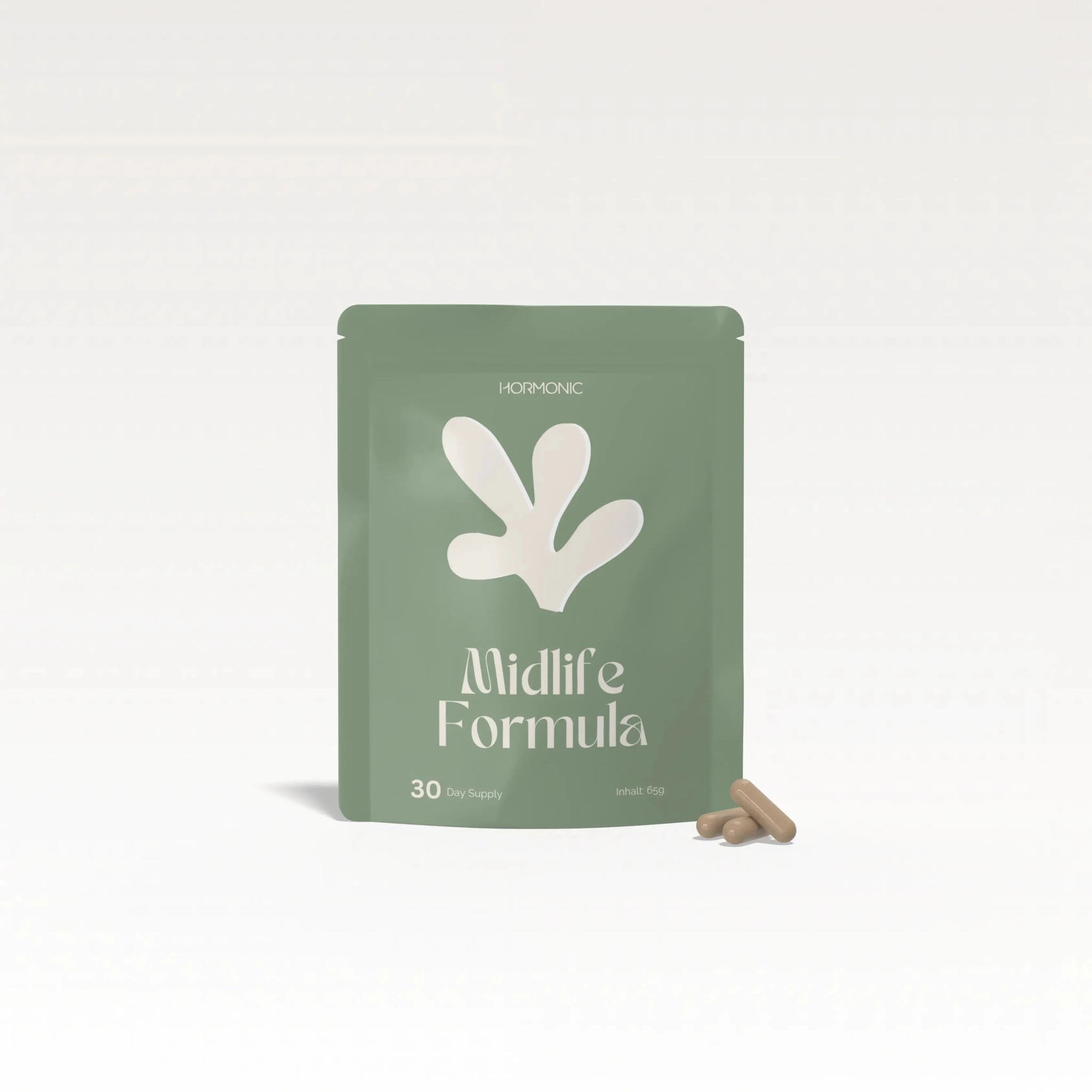
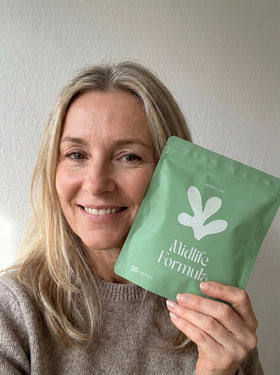
Midlife bloating is often related to the shift in estrogen and progesterone levels. Midlife Formula was developed specifically for this phase, combining 9 botanicals such as red clover, wild yam, and saffron, which have been scientifically studied in connection with menopause. Doctor-developed, produced in Austria.

Discover now

What you can do about a bloated belly

The most effective approach is rarely a single measure, but rather a combination of diet, exercise, and stress reduction. Because several mechanisms are at work simultaneously, it is worth addressing the issue from multiple angles. The good news: much of this can be implemented in everyday life and often takes effect after just a few weeks.

Diet and fiber

Soluble fiber is your most important tool against a sluggish bowel. It binds water, makes stool softer, and feeds the good gut bacteria. It is important to increase the amount slowly and drink enough fluids; otherwise, the bloating may even briefly intensify at first. One soluble fiber that stands out in studies for its good tolerability is acacia fiber: in a randomized study involving people with irritable bowel syndrome and constipation, it was tested as a gentle prebiotic (European Journal of Nutrition, 2024). Also, make sure to reduce highly processed, high-salt convenience foods, as salt attracts water, and eat consciously and slowly so that you swallow less air.

Exercise that gets the gut moving

Exercise is one of the simplest remedies for gas and sluggishness. Even a ten to fifteen-minute walk after a meal gets the bowel moving and helps to transport gases away. Strength training works a level deeper: it maintains muscle mass, stabilizes blood sugar, and thus works against the storage of visceral belly fat. Both together address both the daily bloating and the underlying distension. You can read about how weight and fat distribution generally change during this phase in our article on weight gain during menopause.

Reducing stress

Because cortisol directly slows down digestion, stress reduction is part of the abdominal health topic, even if it seems illogical at first. Regular sleep, short breathing or mindfulness exercises, and fixed meal breaks without screens on the side give your gut the calm framework it needs. It's not about perfection, but about reliable little routines.

Where food supplements honestly play a role

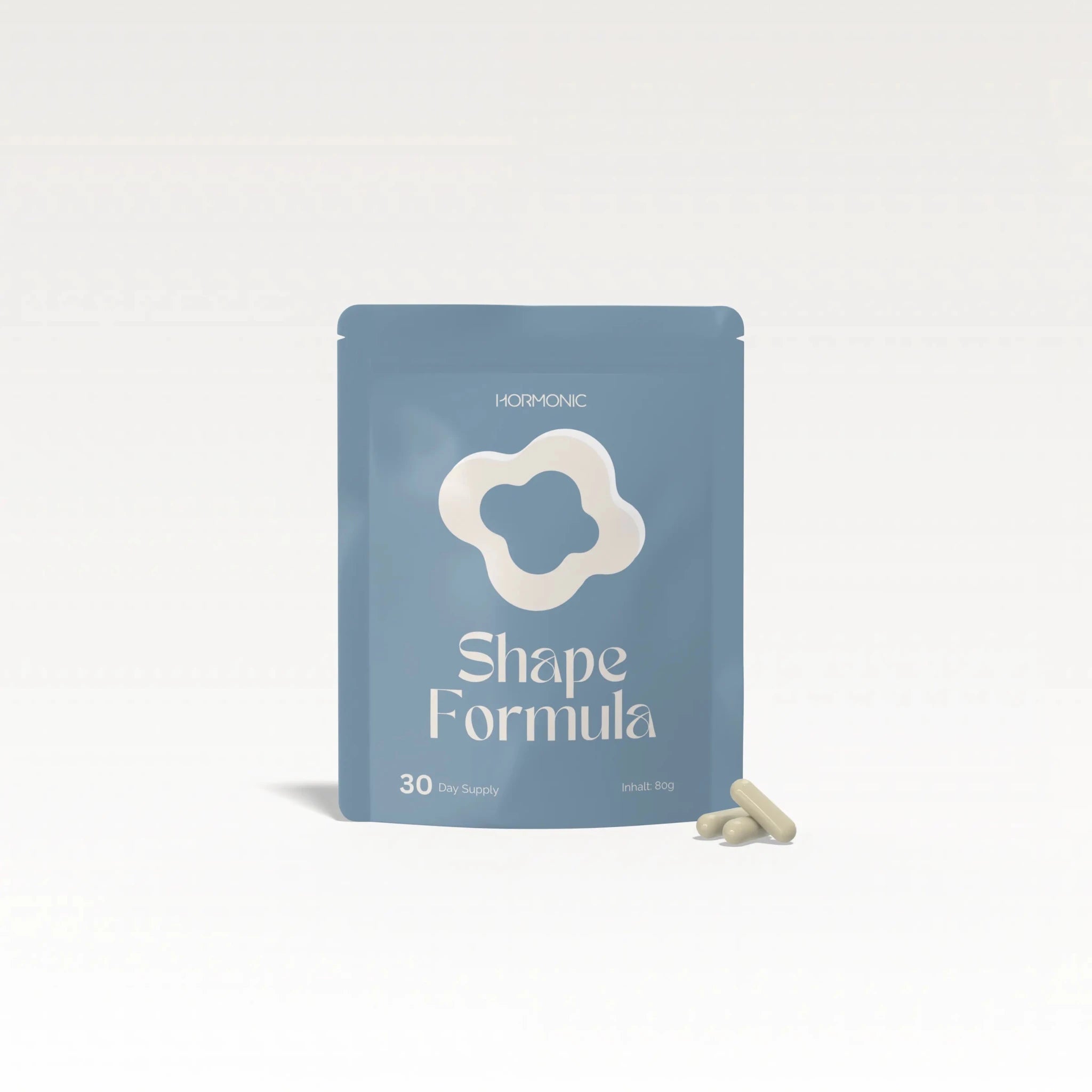
Food supplements do not replace a balanced diet or medical evaluation, but they can provide targeted support. For the gut side, a soluble fiber like acacia fiber in our Shape Formulacan complement a fiber-rich diet. For the hormonal midlife itself, there are plant-based substances like red clover, wild yam, and saffron, which are scientifically studied in the context of menopause, and which our Midlife Formulacombines for this phase. An honest perspective is important: these substances are building blocks, not a quick fix, and they work best when embedded in the habits mentioned above.

When you should seek medical advice

A temporarily bloated belly is usually harmless during menopause. However, there are warning signs that should be evaluated by a doctor: bloating that remains persistent and no longer fluctuates, that affects only one side of the abdomen, that is accompanied by pain, fever, unintentional weight loss, or blood in the stool, as well as any bleeding after menopause. A bowel movement pattern that has changed significantly over several weeks should also be investigated. Such cases are rare, but it is important to rule them out. If you are unsure how to classify your symptoms, you can discuss this in a free introductory consultationwith one of our doctors. Our comprehensive menopause guideprovides you with a total medical overview of this life phase.

For a more detailed assessment, also with regard to cycle, sleep, and hormones, there is the menopause video consultationwith a doctor.

The Trio for Hormones, Menopause & Metabolism

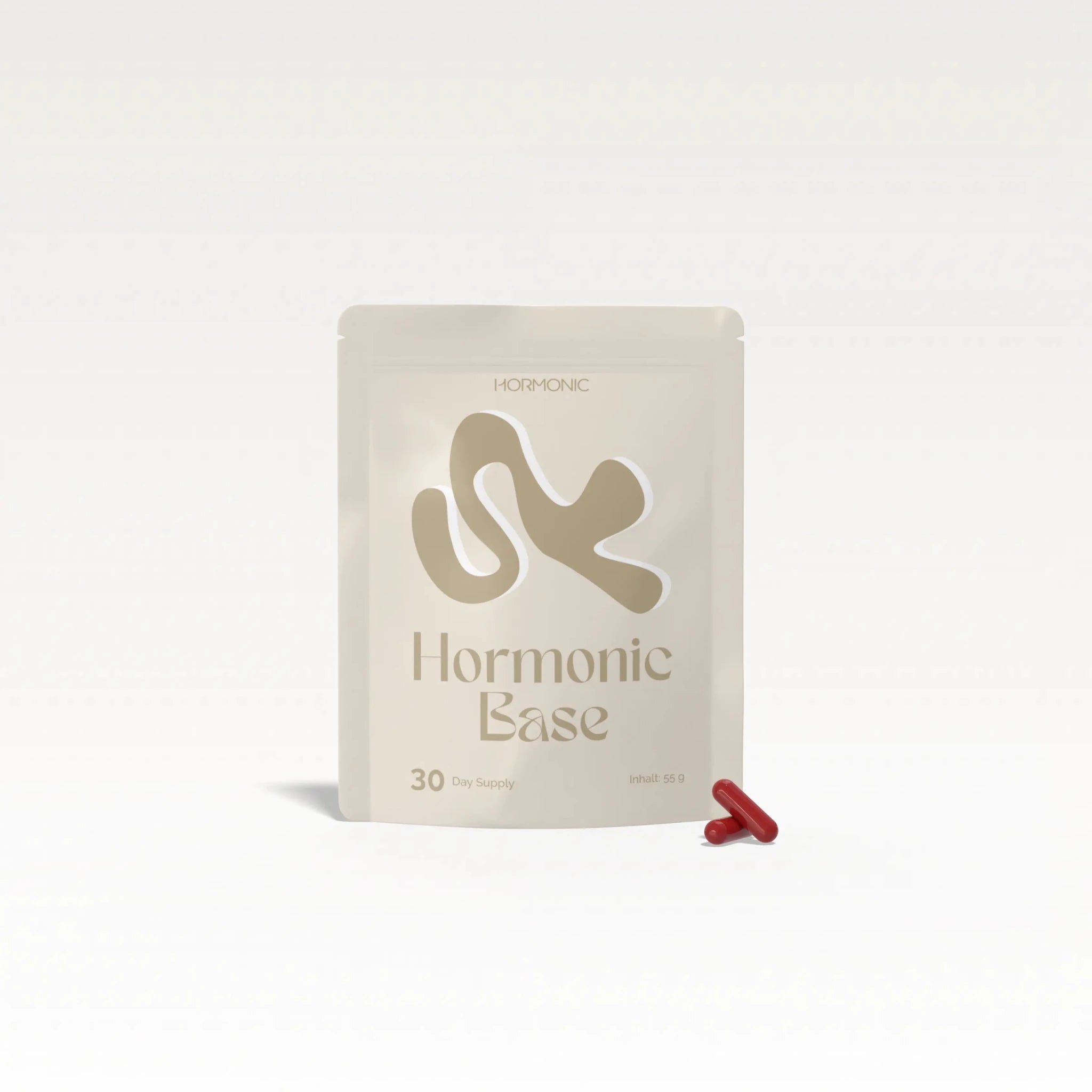
Hormonic Base provides the daily foundation, Midlife Formula supplements specific botanicals for hormonal changes, while Shape Formula addresses metabolism, blood sugar, and the gut. The power duo for maximum support during this phase!

Start with a discount

Conclusion

A belly that looks pregnant during menopause is almost always true distention and rarely just a matter of calories. Fluctuating estrogen and progesterone slow down the intestines, promote gas and water retention, and at the same time, fat distribution shifts towards the center of the abdomen. This explains why your pants feel tight in the evening and the mirror shows a different picture in the morning.

You are not powerless against this. More soluble fiber, regular exercise, slow eating, and less chronic stress address precisely the mechanisms that cause bloating. Supplements can usefully complement this foundation, but do not replace it. And if warning signs appear, a visit to the doctor is not a detour, but the correct next step.

Common Questions About Bloating During Menopause

Why does my stomach look pregnant during menopause?

The impression is usually created by actual abdominal distension, not just by fat. When estrogen and progesterone fluctuate, bowel activity slows down, more gas and water accumulate, and the lower abdomen visibly protrudes. Additionally, in midlife, fat distribution shifts towards the abdomen. This combination often makes the belly appear fuller in the evening than in the morning.

Is bloating normal during menopause?

Yes, a temporarily bloated stomach is very common in perimenopause and is harmless in most cases. Digestive problems have been shown to increase during this phase. Nevertheless, watch out for warning signs: If the bloating is persistent, one-sided, painful, or accompanied by bleeding, weight loss, or significantly altered bowel movements, you should have it checked by a doctor.

Was hilft gegen den geblähten Unterbauch?
Am meisten bringt eine Kombination: langsam mehr lösliche Ballaststoffe, ausreichend trinken, regelmäßige Bewegung, achtsames und langsames Essen sowie Stressabbau, weil Cortisol die Verdauung ausbremst. Stark verarbeitete, salzreiche Lebensmittel in Maßen zu halten, hilft vielen Frauen zusätzlich. Steht eine hormonelle Verschiebung im Vordergrund, kann ein ärztliches Gespräch sinnvoll sein.
Wann sollte ich einen aufgeblähten Bauch ärztlich abklären lassen?
Wenn die Auftreibung nicht mehr weggeht, nur eine Bauchseite betrifft, mit Schmerzen, Fieber, ungewolltem Gewichtsverlust, Blut im Stuhl oder Blutungen nach der Menopause einhergeht, gehört das zeitnah in ärztliche Hände. Auch ein plötzlich und über mehrere Wochen veränderter Stuhlgang sollte abgeklärt werden. Solche Zeichen sind selten, aber wichtig auszuschließen.

Scientific Sources

  • Shaw, N., Abbott, R. & Pettinger, C. (2025). The volume and characteristics of research on gastrointestinal symptoms in natural peri- and postmenopause: A scoping review. Women's Health (London). doi:10.1177/17455057251387470
  • Sex hormones and functional gastrointestinal disorders in menopausal women (2026). Frontiers in Endocrinology. doi:10.3389/fendo.2026.1679338
  • Szeliga, A., Chedraui, P. & Meczekalski, B. (2026). The Impact of the Menopausal Transition on Body Composition and Abdominal Fat Redistribution. Journal of Clinical Medicine. doi:10.3390/jcm15020740
  • Changes in abdominal subcutaneous adipose tissue phenotype following menopause is associated with increased visceral fat mass (2021). Scientific Reports. doi:10.1038/s41598-021-94189-2
  • Acacia fiber or probiotic supplements to relieve gastrointestinal complaints in patients with constipation-predominant IBS: a randomized double-blinded placebo-controlled intervention trial (2024). European Journal of Nutrition. doi:10.1007/s00394-024-03398-8
  • Effects of dietary fibers or probiotics on functional constipation symptoms and roles of gut microbiota: a double-blinded randomized placebo trial (2023). Gut Microbes. doi:10.1080/19490976.2023.2197837

About the Author

Lee Paulina Pape

Lee Paulina Pape

Founder · MSc Psychology · Hormonic

Lee is a psychologist (MSc) and co-founder of Hormonic. As CEO, she makes women's hormonal health understandable and accessible.

Note: This article is based on current guidelines and scientific work (as of 2026). It is for informational purposes only and does not replace medical advice, diagnosis, or treatment.

Share

You might also be interested in this.

Wassereinlagerungen loswerden: was wirklich entwässert - Hormonic
StoffwechselJul 28, 20267 min read
Get rid of water retention: what really drains

Getting rid of water retention: What really helps drain excess fluid, what doesn't work, and when water retention is a warning sign that needs medical attention.
Blutzucker natürlich senken: Was wirklich hilft - Hormonic
ErnährungAug 11, 20268 min read
Lowering Blood Sugar Naturally: What Really Works

Naturally Lower Blood Sugar: The four most important levers from diet, exercise, sleep, and nutrients, honestly assessed according to scientific studies.

Blähbauch bei Frauen: Ursachen und was wirklich hilft - Hormonic
ErnährungJul 19, 20268 min read
Bloating in Women: Causes and What Really Helps

Why am I constantly bloated? The honest truth: why it's often not just air, the connection to your cycle, and what really helps.