🖤 Black WeeksPick 3 · save 30 %Pick 6 · save 60 %Automatic, no codeFor a limited time onlyEurope-wide shipping🖤 Black WeeksPick 3 · save 30 %Pick 6 · save 60 %Automatic, no codeFor a limited time onlyEurope-wide shipping🖤 Black WeeksPick 3 · save 30 %Pick 6 · save 60 %Automatic, no codeFor a limited time onlyEurope-wide shipping

Cart

Your cart is empty

Continue shopping

Trending searches

Featured products

Hormonic Base - Hormonic - Nahrungsergänzungsmittel
Sale price€65,00
(5.0)
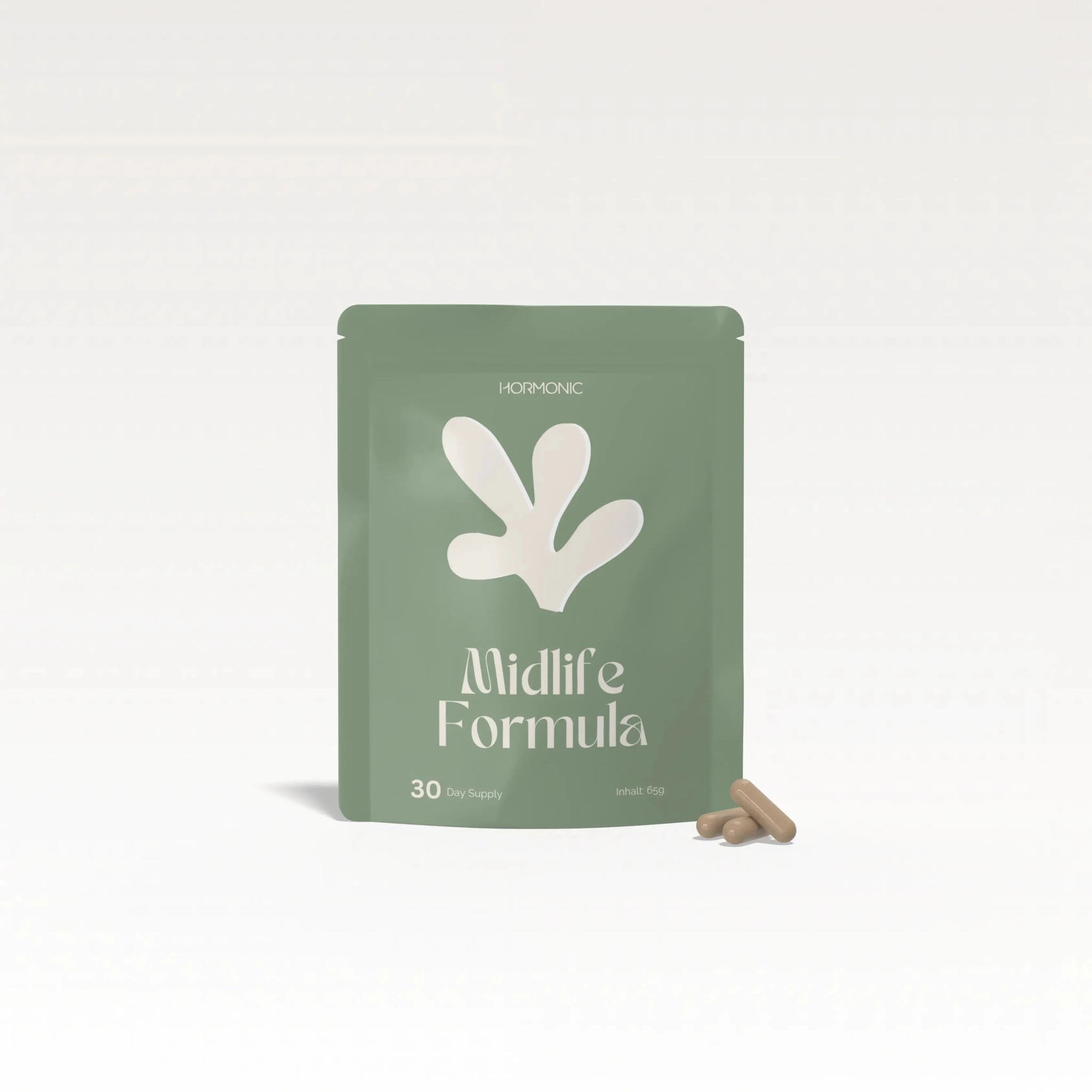
Midlife Formula - Hormonic - Nahrungsergänzungsmittel
Sale price€75,00
(5.0)
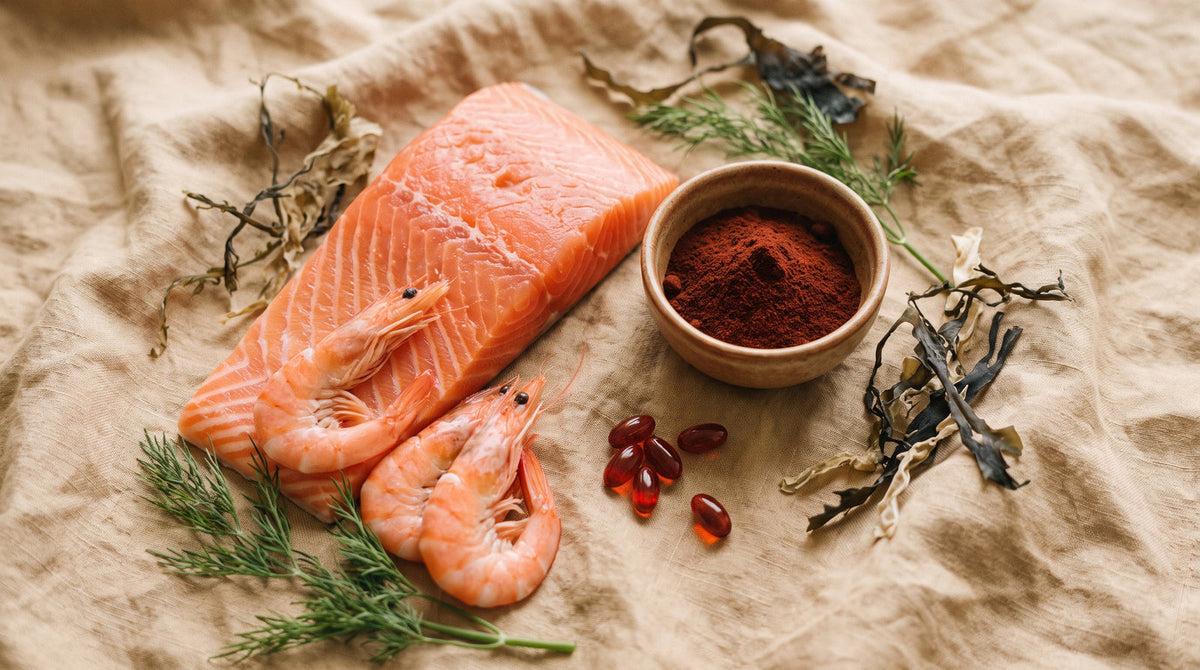
Natürliche Astaxanthin Quellen wie Wildlachs, Garnelen und rötliches Algenpulver auf hellem Leinen zum Thema Astaxanthin Wirkung
MikronährstoffeOct 1, 20268 min read

Astaxanthin effects: What the red antioxidant can really do according to studies

This article is part of: Micronutrients and Hormones: The Female Guide

Many consider astaxanthin to have the effect of a particularly powerful antioxidant. Astaxanthin is the deep red natural pigment that colors salmon, shrimp, and some microalgae, and it belongs to the carotenoid family. In this article, we take an honest look at what research actually shows about the effect of astaxanthin on skin, eyes, oxidative stress, and your cellular health, where the body of evidence is convincing, and where it is still preliminary. One thing first: There is no approved health claim for astaxanthin in the EU. This is not unusual for "newer" plant substances, as there simply aren't enough studies and data yet to make generalized statements. Therefore, we are speaking here exclusively about study results and observed effects, and we do not make any medical promises.

The most important points in brief

  • Astaxanthin is a fat-soluble carotenoid derived primarily from the microalga Haematococcus pluvialis and is found naturally in salmon, shrimp, and krill.
  • Its role as an antioxidant is the best-researched. Several studies have observed a higher antioxidant capacity and lower oxidative stress, although the strength of these findings is not consistent across all investigations.
  • For the skin, several smaller controlled studies indicate beneficial effects on elasticity and hydration. The results are promising.
  • Other areas investigated include visual comfort and eye fatigue, endurance and recovery, and cardiometabolic markers such as blood lipids.
  • There is no approved EU health claim. All statements remain based on studies and do not constitute proven medical effects.

What is astaxanthin and where does it come from?

Astaxanthin is a red carotenoid that is produced in nature primarily by the microalga Haematococcus pluvialis. When the algae are stressed, for example by intense light or a lack of nutrients, they accumulate large amounts of astaxanthin to protect themselves. Through the food chain, the pigment reaches salmon, trout, shrimp, and krill, giving them their typical reddish hue.

As a fat-soluble molecule, astaxanthin can integrate into the cell membrane. There, it reaches from the inner to the outer layer and can neutralize free radicals at both ends. It is precisely this position in the membrane that is discussed in research as a reason why astaxanthin appears so active in laboratory models. You can read how we categorize and use astaxanthin at Hormonic on our astaxanthin ingredient page.

How does astaxanthin work in the body?

The best-supported property of astaxanthin is its antioxidant activity. Put simply, an antioxidant helps to intercept aggressive molecules, known as free radicals, before they damage cell structures. An imbalance between free radicals and the body's own defenses is called oxidative stress.

This oxidative stress is the common thread that connects most of the studied effects of astaxanthin. The research hypothesis follows an indirect chain: astaxanthin acts as an antioxidant, can dampen oxidative stress and inflammatory signals, and subsequently influence areas that are sensitive to oxidative stress. These include the skin and its elasticity, the eyes, recovery after exertion, and cardiometabolic markers. Each of these areas is researched to a different extent, and we evaluate this honestly below. You can read how astaxanthin fits into the bigger picture of micronutrients for women in our comprehensive guide.

Area of effect What was observed in studies Classification of evidence
Oxidative stress Higher total antioxidant capacity, lower markers like MDA in several controlled studies Mixed to convincing, depending on dosage and duration
Skin Better elasticity and hydration, lower increase in wrinkle depth compared to placebo Promising, but small studies and preliminary
Eyes Better accommodation and less eye fatigue as well as relief for dry eyes Moderate, smaller studies
Endurance and recovery Inconsistent effects on muscle soreness, muscle damage, and performance Mixed
Blood lipids Indications of higher HDL and lower triglycerides, barely any effect on LDL Mixed
Did you know?Astaxanthin is often compared to other antioxidants. In laboratory models, it intercepted free radicals in certain test systems significantly more effectively than Vitamin E. However, such laboratory data do not yet indicate how strong the effect is in the human body. This is precisely why we distinguish between test tubes and actual human studies.

Astaxanthin and the skin: What the studies show

For the skin, astaxanthin is among the most intensively studied carotenoids, and several smaller controlled studies point to beneficial effects. In a widely cited 16-week study of 65 healthy women, wrinkle parameters and skin hydration worsened significantly in the placebo group, while they remained largely stable in the astaxanthin groups.

Another 12-week study combined astaxanthin with collagen in 44 women with photo-aged skin and observed improvements in several measurements of skin elasticity and transepidermal water loss. Because two substances were combined here, the effect cannot be attributed to astaxanthin alone.

The suspected mechanism aligns with the indirect chain: UV light and oxidative stress promote the degradation of collagen and elastin in the skin. As an antioxidant, astaxanthin could mitigate this process. An honest assessment remains important: these are small studies, often with industry involvement, and wrinkle depth usually did not actively improve, but rather worsened less than it did with a placebo.

Astaxanthin, oxidative stress, and inflammation

The most consistent evidence concerns the role of astaxanthin in the body's oxidative balance. In a controlled study of heart failure patients who took 20 mg daily for eight weeks, total antioxidant capacity increased and a marker for oxidative damage decreased compared to a placebo.

A higher total antioxidant capacity was also observed in people with type 2 diabetes taking 10 mg daily over 12 weeks. At the same time, the study findings are not uniform: one review found antioxidant effects more often after shorter intake periods, but not always after 12 weeks or longer. This shows that dose, duration, and the group studied play a major role.

In parallel, an inflammation-modulating effect is being discussed. In laboratory and animal models, astaxanthin dampened the release of pro-inflammatory messengers. In humans, these anti-inflammatory effects are currently less clearly substantiated than the antioxidant ones.

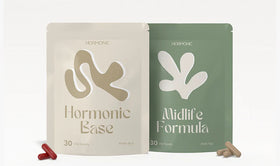
Astaxanthin is part of the Midlife Formula

Astaxanthin is one of the 9 active ingredients in the Midlife Formula, developed by doctors and produced in Austria. Save 20 percent permanently with a subscription with free shipping, cancel anytime, and enjoy a 30-day money-back guarantee.
Discover Midlife Formula

Astaxanthin for eyes, endurance, and cardiovascular health

Regarding the eyes, small controlled studies suggest benefits for visual comfort. In a study of people with mild to moderate dry eyes, symptoms and measurements improved compared to the baseline after taking 6 mg of astaxanthin for about a month. In addition, there are older studies in which accommodation, i.e., the eye's ability to focus, and eye fatigue improved during screen work. The studies are small, but the trend is consistent.

When it comes to sports and endurance, the situation is less clear. Some studies found evidence of better training adaptation or less oxidative stress, while others failed to show a clear effect on muscle soreness, muscle damage, or performance. Overall, the evidence here is rather weak and requires larger, better-controlled studies.

For cardiometabolic health, a recent meta-analysis from 2025 shows that astaxanthin in dosages of about 6 to 20 mg daily may be associated with higher HDL levels and lower triglycerides, while LDL cholesterol hardly changes. Older meta-analyses found no significant effect on blood lipids at all. The data therefore remain mixed.

Astaxanthin for women over 40

Astaxanthin becomes particularly interesting in midlife because oxidative stress tends to increase with age, and hormonal changes around perimenopause can also be accompanied by shifts in the oxidative balance. An antioxidant like astaxanthin is being researched in this context, and topics such as skin elasticity, visual comfort, and cell protection are particularly relevant for many women during this phase.

This is explicitly not a promise that astaxanthin relieves menopausal symptoms. It only explains why the substance is being researched for this phase of life. This is why astaxanthin is one of the components we have included in our midlife formula, embedded in a broader synergy of active ingredients.

Dosage, intake, and safety

Studies typically use 4 to 12 mg of natural astaxanthin per day, with individual studies using up to 20 mg. Because astaxanthin is fat-soluble, it is best absorbed with a meal containing some fat. Natural astaxanthin from Haematococcus pluvialis is considered well-tolerated in the amounts studied.

In very high doses, the skin may temporarily take on a slight reddish tint, which is harmless and reversible. If you are taking medication, such as blood thinners or medication for high blood pressure, or if you are pregnant or breastfeeding, please consult your doctor before use.

Even more support: the Midlife Bundle

The Midlife Bundle combines the Hormonic Base with the Midlife Formula, providing a total of 25 active ingredients for your daily essential nutrient intake and the specific needs of midlife. An option if you would like to take both in a coordinated regimen.

Discover Midlife Bundle

Conclusion

Astaxanthin is a well-researched antioxidant with a clear strength: it can scavenge free radicals and has been linked in several studies to higher antioxidant capacity and lower oxidative stress. From there, an indirect chain leads to areas such as the skin, eyes, and cardiometabolic markers, which are supported by varying degrees of evidence.

Its role in oxidative balance is the most convincing, the data on skin is promising and preliminary, the eye data is moderate, and the results regarding endurance and blood lipids are mixed. There is no approved EU health claim, so everything remains at the stage of research studies. Those who wish to try astaxanthin are making a reasonable choice by selecting a natural product derived from microalgae in an appropriate dosage, preferably as part of a well-considered routine rather than as a single miracle cure.

The fact that astaxanthin has no officially approved health claim says little about its actual effectiveness. An EFSA-approved claim requires very large, expensive clinical trials, which are almost only financially worthwhile for a patentable product. For a natural substance that no one can market exclusively, the economic basis for this is simply lacking. A missing claim therefore often just means that no one has funded the large-scale studies yet, and not that the substance has been proven ineffective.

Frequently Asked Questions about the Effects of Astaxanthin

What are the effects of astaxanthin on the body?

Astaxanthin acts primarily as an antioxidant. It can scavenge free radicals and has been linked in studies to a higher antioxidant capacity and lower oxidative stress. Through this mechanism, its effects on the skin, eyes, and cardiometabolic markers are also being investigated, though the evidence for these varies in strength.

How quickly does astaxanthin take effect?

That depends on the area being studied. In eye fatigue studies, effects appeared after about four weeks, while skin studies usually lasted 12 to 16 weeks. Astaxanthin is not a substance for an immediate effect, but is taken regularly over weeks. Noticeable changes are individual and not guaranteed.

Ist Astaxanthin wirklich so stark wie oft behauptet?
Astaxanthin ist in Labormodellen ein sehr aktives Antioxidans und übertraf dort in einzelnen Tests Vitamin E. Im menschlichen Körper ist die Wirkung aber vorsichtiger einzuordnen, weil die Studien oft klein sind und die EU keinen gesundheitsbezogenen Claim zugelassen hat. Die realistische Einordnung lautet: ein gut untersuchtes Antioxidans mit vielversprechenden, aber teils vorläufigen Ergebnissen.
Für wen ist Astaxanthin sinnvoll?
Erforscht wird Astaxanthin vor allem für Menschen, die etwas für ihr oxidatives Gleichgewicht, ihre Haut oder ihren Sehkomfort tun möchten, besonders in der Lebensmitte. Es ersetzt keine ausgewogene Ernährung und keine ärztliche Behandlung. Wenn Du Medikamente nimmst, schwanger bist oder stillst, kläre die Einnahme vorab ärztlich ab.

Scientific Sources

  • Astaxanthin and skin aging, 16-week controlled study with 65 women (2017): https://pmc.ncbi.nlm.nih.gov/articles/PMC5525019/
  • Astaxanthin and blood lipids, systematic review and meta-analysis (2025): https://pmc.ncbi.nlm.nih.gov/articles/PMC12389351/
  • Haematococcus pluvialis as a source of natural astaxanthin, review article: https://pmc.ncbi.nlm.nih.gov/articles/PMC8587866/
  • Astaxanthin for mild to moderate dry eye disease, controlled study: https://pmc.ncbi.nlm.nih.gov/articles/PMC8792747/
  • Marine-Derived Astaxanthin, mechanisms and biomedical applications, review article (2025): https://www.mdpi.com/1660-3397/23/6/235

About the Author

Amelie Weiss

Amelie Weiss

Research Fellow, PhD · Hormonic

Amelie Weiss is a Research Fellow at Hormonic and conducts scientific research on hormonal health, micronutrients, and evidence-based women's health.

Note: This article is based on current guidelines and scientific work (as of 2026). It is for informational purposes only and does not replace medical advice, diagnosis, or treatment.

Share

You might also be interested in this.
Polyphenole: Wirkung auf Hormone, PCOS und Stoffwechsel - Hormonic
MikronährstoffeJun 22, 20268 min read
Polyphenols: Effects on Hormones, PCOS, and Metabolism

Polyphenols from berries, green tea, and turmeric in an honest fact check: What studies actually show about their effects, hormones, and PCOS.
Kurkuma bei Frauen: Was Curcumin laut Studien wirklich kann - Hormonic
MikronährstoffeJul 25, 20267 min read
Turmeric for Women: What Curcumin Can Really Do, According to Studies

Turmeric and Curcumin in Women: What studies show about menstrual pain, PMS, and inflammation, how bioavailability works, and what to watch out for with your liver.
Welche Supplements sollten Frauen täglich nehmen? Der evidenzbasierte Stack - Hormonic
MikronährstoffeDec 8, 20259 min read
Which supplements should women take daily? The evidence-based stack

These 4 supplements are recommended daily by science for women: Micronutrient basis, Omega-3, Creatine, and targeted gut-hormone add-ons. Without hype, with a study basis.