


Coenzyme Q10 is a substance produced by the body that helps generate energy in the mitochondria and acts as an antioxidant. This article explores what coenzyme Q10 means for women, what studies have observed regarding egg quality, PCOS, and energy, and how to assess this information objectively.
Key takeaways
- Coenzyme Q10 is central to energy production in the mitochondria and acts as an antioxidant.
- The body's own production decreases with age.
- Studies have shown a potential benefit for reduced ovarian reserve during assisted reproduction.
- In studies on PCOS, Q10 moderately and inconsistently improved metabolic markers.
- There is no EFSA-approved health claim for coenzyme Q10, but there are promising studies.
As a research fellow, I rarely encounter a nutrient in fertility forums as often as coenzyme Q10, usually with major promises regarding egg quality. The body of evidence is indeed interesting but significantly more nuanced than the marketing suggests. That is why I would like to sort through the facts honestly: What can Q10 really do for women, and where does the evidence fall short?
Coenzyme Q10, also known as ubiquinone, is a vitamin-like substance found in almost every cell in the body. Its primary role is in the mitochondria, the cell's power plants, where it is involved in producing the energy carrier ATP. Additionally, as a fat-soluble antioxidant, it protects cells from oxidative stress.
Did you know?
Coenzyme Q10 is not a true vitamin. Although it is often found in drugstores right next to vitamin C or E, it is not a true vitamin. Humans must obtain vitamins through their diet. However, because the body can produce Q10 itself, it is officially classified only as a "vitamin-like substance."
What coenzyme Q10 does in the body
Coenzyme Q10 has two central functions: it is an indispensable building block in the mitochondrial respiratory chain, where energy is generated from nutrients in the form of ATP, and it acts as an antioxidant that protects cell structures from oxidative stress. The body produces Q10 itself, but this internal production decreases with age; in the heart muscle of 80-year-olds, it is about half the level of young adults.
| Form | Special feature |
|---|---|
| Ubiquinone | the oxidized form, used in most positive studies |
| Ubiquinol | the reduced form, slightly better absorbed into the blood, but a clear advantage is not proven |
| Typical dose | 100 to 300 mg per day, fat-soluble, best taken with a meal |
This combination of energy metabolism and cell protection is the reason why Q10 is being studied for issues like egg quality and metabolism, as both are sensitive to mitochondrial energy and oxidative stress.
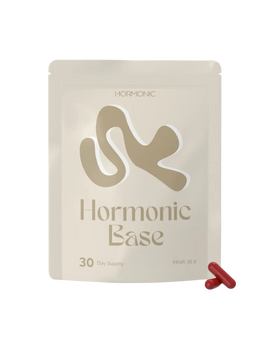
The all-in-one with coenzyme Q10 and 15 other micronutrients
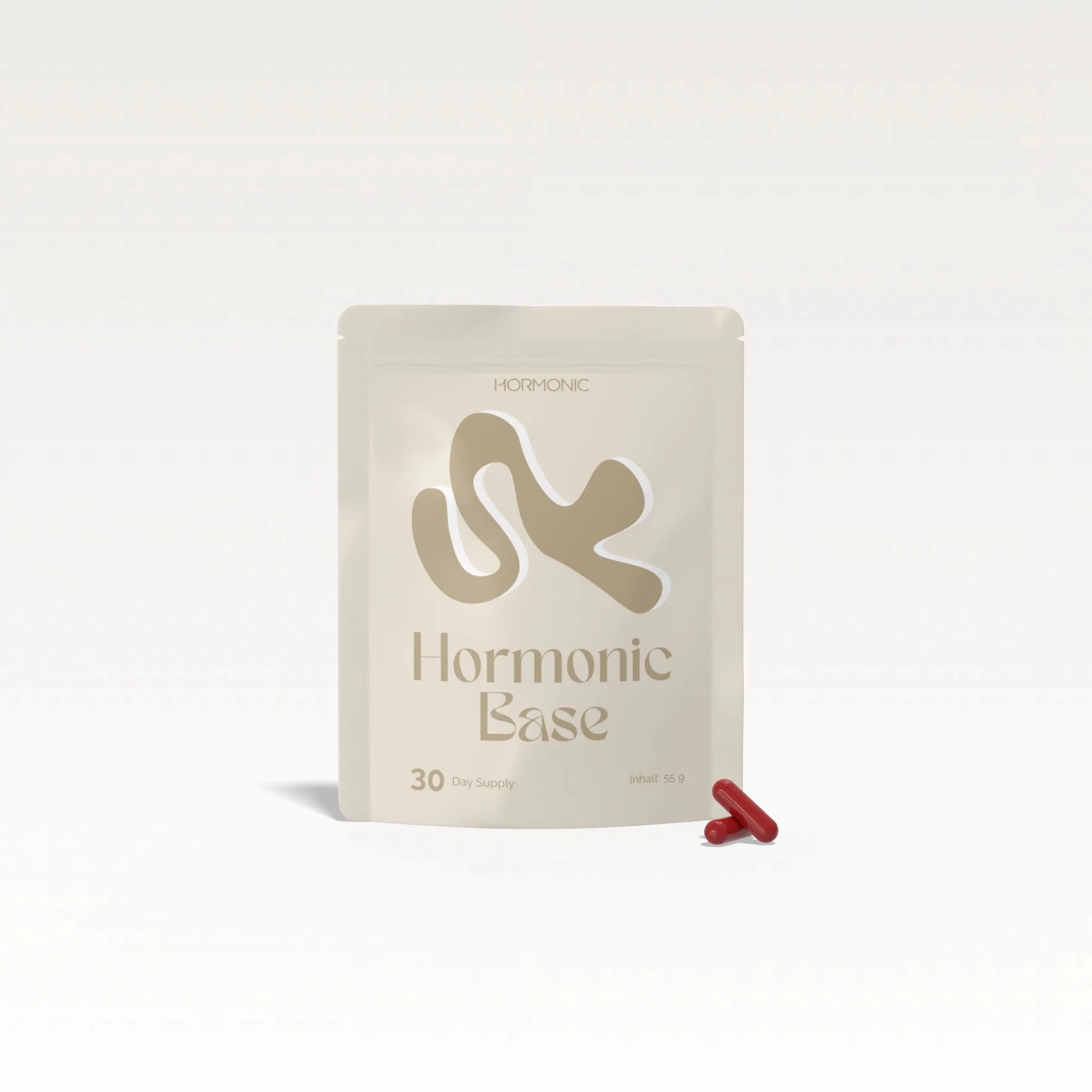
Hormonic Base contains coenzyme Q10 along with 15 other essential micronutrients. These include active ingredients with approved claims such as vitamin B6, which contributes to the regulation of hormonal activity, and selenium, which protects cells from oxidative stress. Physician-developed as a well-thought-out daily foundation for your hormonal health.
€65,00

The Cycle Bundle: Base and Cycle+ for your cycle
Our Cycle Bundle combines the Hormonic Base with Cycle+ and covers your daily basic nutritional needs for your cycle and fertility with 24 active ingredients. This gives you micronutrients like zinc and folate in a coordinated routine, instead of juggling individual doses. Get 20 percent off permanently with a subscription, plus free shipping; cancel anytime, with a 30-day money-back guarantee.
Common Questions About Coenzyme Q10 in Women
What are the benefits of Coenzyme Q10 for women?
Does coenzyme Q10 really help egg cells?
Wie viel Coenzym Q10 am Tag als Frau?
Ubichinol oder Ubichinon, was ist besser?
Scientific Sources
- Clinical evidence of coenzyme Q10 pretreatment for women with diminished ovarian reserve undergoing IVF/ICSI: a systematic review and meta-analysis (2024). Annals of Medicine, 56(1), 2389469. doi:10.1080/07853890.2024.2389469
- He, Q. et al. (2023). Efficacy and Safety of Coenzyme Q10 Supplementation in the Treatment of Polycystic Ovary Syndrome: a Systematic Review and Meta-analysis. Reproductive Sciences, 30, 1033-1048. doi:10.1007/s43032-022-01038-2
- Fan, L. et al. (2023). Efficacy and optimal dose of coenzyme Q10 supplementation on inflammation-related biomarkers: a GRADE-assessed systematic review and updated meta-analysis of randomized controlled trials. Molecular Nutrition & Food Research, 67(13), 2200800. doi:10.1002/mnfr.202200800
- Tsai, I. C. et al. (2022). Effectiveness of coenzyme Q10 supplementation for reducing fatigue: a systematic review and meta-analysis of randomized controlled trials. Front Pharmacol, 13, 883251. doi:10.3389/fphar.2022.883251
- Akbari, A. et al. (2020). Coenzyme Q10 supplementation and oxidative stress parameters: a systematic review and meta-analysis. Eur J Clin Pharmacol, 76(11), 1483-1499. doi:10.1007/s00228-020-02919-8
- Xu, Y. et al. (2018). Pretreatment with coenzyme Q10 improves ovarian response and embryo quality in low-prognosis young women with diminished ovarian reserve: a randomized controlled trial. Reprod Biol Endocrinol, 16, 29. doi:10.1186/s12958-018-0343-0
- Hernández-Camacho, J. D. et al. (2018). Coenzyme Q10 Supplementation in Aging and Disease. Front Physiol, 9, 44. doi:10.3389/fphys.2018.00044
About the Author

You might also be interested in this.

How does inositol work for PCOS, what do studies show regarding ovulation, testosterone, and insulin resistance, and what is a sensible dosage? The evidence-based overview.
Which nutrients really help with fertility? We provide an evidence-based classification of folic acid, CoQ10, myo-inositol, omega-3, and diet, for women and men.

Which micronutrients truly support your hormones? The honest, evidence-based guide to magnesium, vitamin D, omega-3, and B vitamins, with a clear evaluation of the study situation.