
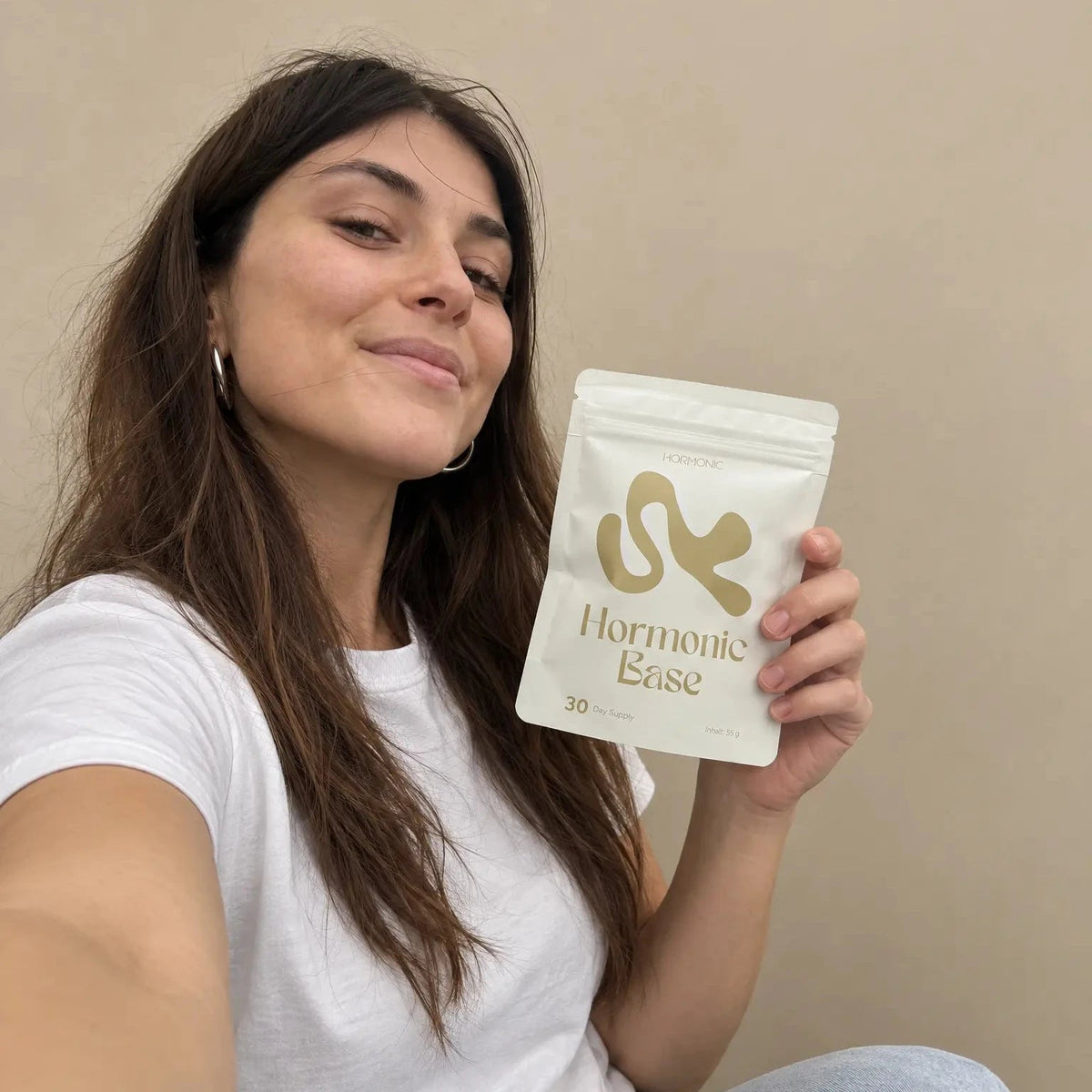

"Bring your hormones into balance naturally": With this promise, capsules are being offered to you everywhere right now, from the drugstore to Instagram ads. I am Lee, co-founder of Hormonic, and I will tell you honestly: some of these products contain sensible, well-researched active ingredients. Others are primarily selling you nice packaging. The problem: from the outside, both look the same. In this check, we will go through the typical ingredients of hormone balance capsules one by one, look at the studies, and clarify how to recognize a good product.
What is actually in hormone balance capsules
"Hormone Balance", "Female Balance", "Cycle Complex": These terms are not legally protected. Every manufacturer can use them and decide for themselves what goes into the capsule. In practice, the same candidates keep appearing: chasteberry, myo-inositol, vitamin B6, magnesium, zinc, ashwagandha, saffron, wild yam, and lady's mantle, often combined with other vitamins and plant extracts.
Important to know: dietary supplements in the EU are not allowed to make medicinal claims. Which statements are permitted is regulated by the Health Claims Regulation, and the list of approved statements is short. For vitamin B6, for example, the contribution to the regulation of hormonal activity is recognized (EFSA, 2010). If, on the other hand, a product promises to "cure" your hormones or "fix" your cycle, that is not a quality indicator but a warning signal.
An overview of typical ingredients
| Active ingredient | Typical dose | State of research |
|---|---|---|
| Chasteberry | 20 mg special extract | Randomized studies for PMS are positive; effect depends on extract and dose |
| Myo-Inositol | 2,000 to 4,000 mg | Relatively well-researched for PCOS, discussed as an option in guidelines |
| Vitamin B6 | 1.4 to 25 mg | EFSA claim for regulation of hormonal activity; PMS data limited but existing |
| Magnesium | approx. 300 mg | EFSA claims for tiredness, nerves, and muscles; no direct hormone claim |
| Ashwagandha | 240 to 600 mg extract | Data on stress and cortisol, but with potential side effects. Data on "hormone balance" is thin |
| Saffron | 30 mg | Small randomized studies for PMS symptoms |
| Wild yam | variable | Only small studies so far, interesting for menopause |
| Lady's mantle | no standard dose | Traditional use, no robust clinical studies |
The table already shows the fundamental problem: under the same "hormone balance" label, active ingredients with very solid research backgrounds are grouped with those that live primarily on their tradition. Let's take a closer look at the most important ones.
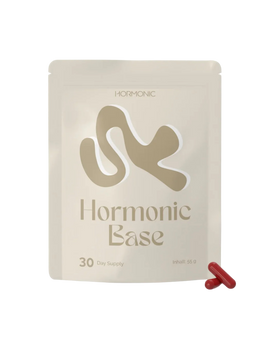
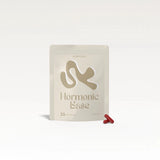
Hormonic Base passes this check. Test us.
Our doctors at Hormonic Base have applied the exact criteria from this article: 16 micronutrients in bioavailable forms, each dosage openly declared, with vitamin B6, which contributes to the regulation of hormonal activity. No proprietary blends, no medical claims. Place the table next to it and compare for yourself.

Start with a solid foundation instead of numerous individual products.
Hormonic Base combines the micronutrients daily relevant for key processes in hormonal health. Combined in a physician-developed formula with clinically selected dosages.
Frequently Asked Questions about Hormone Balance Capsules
Which supplements are useful for hormonal balance?
Is there a test winner for hormone balance capsules?
Wie schnell wirken Mönchspfeffer, Inositol und Co.?
Kann ich Hormon-Balance-Kapseln einfach auf Verdacht nehmen?
Scientific Sources
- Schellenberg R (2001). Treatment for the premenstrual syndrome with agnus castus fruit extract: prospective, randomised, placebo controlled study. BMJ 322(7279):134-137. doi:10.1136/bmj.322.7279.134
- van Die MD et al. (2013). Vitex agnus-castus extracts for female reproductive disorders: a systematic review of clinical trials. Planta Medica 79(7):562-575. doi:10.1055/s-0032-1327831
- Wyatt KM et al. (1999). Efficacy of vitamin B-6 in the treatment of premenstrual syndrome: systematic review. BMJ 318(7195):1375-1381. doi:10.1136/bmj.318.7195.1375
- Teede HJ et al. (2023). Recommendations from the 2023 International Evidence-based Guideline for the Assessment and Management of Polycystic Ovary Syndrome. Human Reproduction 38(9):1655-1679. doi:10.1093/humrep/dead156
- EFSA Panel on Dietetic Products, Nutrition and Allergies (2010). Scientific Opinion on the substantiation of health claims related to vitamin B6. EFSA Journal 8(10):1759. doi:10.2903/j.efsa.2010.1759
- Lopresti AL et al. (2019). An investigation into the stress-relieving and pharmacological actions of an ashwagandha (Withania somnifera) extract. Medicine (Baltimore) 98(37):e17186. doi:10.1097/MD.0000000000017186
- Agha-Hosseini M et al. (2008). Crocus sativus L. (saffron) in the treatment of premenstrual syndrome: a double-blind, randomised and placebo-controlled trial. BJOG 115(4):515-519. doi:10.1111/j.1471-0528.2007.01652.x
- Komesaroff PA et al. (2001). Effects of wild yam extract on menopausal symptoms, lipids and sex hormones in healthy menopausal women. Climacteric 4(2):144-150.
- Stiftung Warentest. Remedies for menopausal symptoms: Tested herbal preparations are poorly suited. test.de
- Regulation (EC) No 1924/2006 on nutrition and health claims made on foods (Health Claims Regulation). EUR-Lex
About the Author

You might also be interested in this.
Which micronutrients truly support your hormones? The honest, evidence-based guide to magnesium, vitamin D, omega-3, and B vitamins, with a clear evaluation of the study situation.
These 4 supplements are recommended daily by science for women: Micronutrient basis, Omega-3, Creatine, and targeted gut-hormone add-ons. Without hype, with a study basis.

Are your nutritional supplements not working? Here are the 7 most common reasons why supplements fail to have an effect, and how you can finally feel the results by improving intake, bioavailabilit...