🖤 Black WeeksPick 3 · save 30 %Pick 6 · save 60 %Automatic, no codeFor a limited time onlyEurope-wide shipping🖤 Black WeeksPick 3 · save 30 %Pick 6 · save 60 %Automatic, no codeFor a limited time onlyEurope-wide shipping🖤 Black WeeksPick 3 · save 30 %Pick 6 · save 60 %Automatic, no codeFor a limited time onlyEurope-wide shipping

Cart

Your cart is empty

Continue shopping

Trending searches

Featured products

Hormonic Base - Hormonic - Nahrungsergänzungsmittel
Sale price€65,00
(5.0)
Midlife Formula - Hormonic - Nahrungsergänzungsmittel
Sale price€75,00
(5.0)
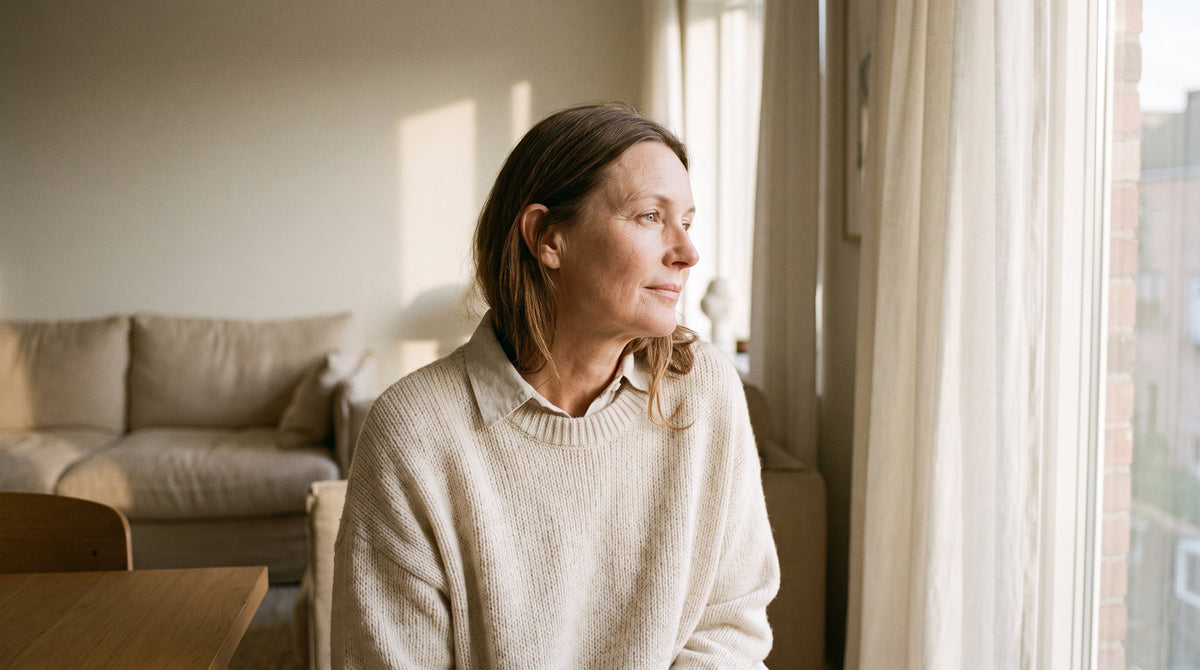
Frau um die 50 in warmem Tageslicht am Fenster, ruhige Aufnahme zum Thema Menopause und Wechseljahre
WechseljahreSep 29, 202611 min read

Menopause: When does it start, how long does it last, and how do you recognize it?

This article is part of: Perimenopause and Menopause: The Complete Medical Guide

In early 2025, 2,500 working women between the ages of 40 and 62 were asked what menopause actually means. 44 percent were able to answer correctly. 21 percent knew what perimenopause means. And half did not know that symptoms typically begin in one's early to mid-forties.

This is not a criticism of the women. In the same survey, 91 percent expected to be informed about it by their gynecologist. Only 19 percent were. This article catches up on that: when menopause arrives, how long it lasts, in what order the signs appear, and when a blood test is actually useful.

Brief definition

Menopause is not a period of time, but a single day: your last menstrual period. It is determined in retrospect once twelve months have passed without a period. What most people mean by "the change of life" (menopause) is perimenopause, the transition leading up to it. Everything from the day after those twelve months is called postmenopause.

The most important points at a glance
  • In Germany, the average age for natural menopause is 51.3 years. The normal range is wide: about two-thirds of women are between 47 and 56.
  • The first objective sign is not the hot flash, but the cycle. It first gets shorter, then irregular, and then stops altogether.
  • Symptoms last a median of 7.4 years, 4.5 of which are after the last period. Those who start early have them for longer.
  • For women over 45, no blood test is needed for a diagnosis. The guidelines state this explicitly.
  • About one-third of women feel almost nothing, one-third have bothersome symptoms, and one-third have truly distressing symptoms.

From when? Menopause in numbers

The average age for natural menopause in Germany is 51.3 years. This figure comes from the EPIC-Heidelberg study of 1,009 women, and the standard deviation is 4.7 years. Translated, this means: around two-thirds of all women experience their last period between the ages of roughly 47 and 56. A study from the Bonn region found a median of 50 years.

The situation is similar internationally. A pooled analysis of eleven prospective studies involving 24,196 women found an average age of 51.4 years. 2.5 percent had early menopause before 45, and 8.1 percent had late menopause from 56 onwards.

You should know two terms, as they mean something different medically: early menopause is used to describe the period between 40 and 44 years of age. If ovarian function stops before the age of 40, it is called premature ovarian insufficiency. The current European guideline puts its frequency at 1 to 3.5 percent. This is the one case where you should not just wait and see.

Phase How you recognize it Duration
Late reproductive phase Cycle still regular, but becomes shorter variable
Early perimenopause Cycle length consistently varies by 7 days or more years
Late perimenopause First gaps of 60 days or longer, hot flashes typical 1 to 3 years
Menopause The final period, confirmed after 12 bleeding-free months a single day
Early postmenopause Hormone levels stabilize at a new baseline about 5 to 8 years

This classification comes from the international STRAW+10 system used by experts worldwide. Practically speaking, the second line is the most important: A persistent difference of seven days or more between two consecutive cycles is the first official criterion. Not the hot flashes, not the bad mood. The calendar.

Menopause is a date that you only know a year later. Everything you feel beforehand is the path leading there.
How long does menopause last?

Menopause itself lasts one day. However, when people ask this, they almost always mean something else: How long do the symptoms last? There is a good answer to that, and it surprises most people.

The largest study on this is the American SWAN study, which followed 1,449 women for a median of nearly 13 years. Result: Frequent hot flashes or night sweats lasted a median of 7.4 years. And the number that is most helpful in conversation: After the final menstrual period, they lasted a median of another 4.5 years(Avis et al., 2015).

The decisive factor is when it starts. Women whose symptoms began before their final period or in early perimenopause experienced them for a median of over 11.8 years. Those who only started after menopause had them for a median of 3.4 years. An early start therefore does not mean it is over faster, but the opposite.

The same pattern applies to the transition itself. An evaluation of 1,145 women with complete cycle calendars found: For those who entered the transition at the youngest age, it lasted a median of 8.57 years. For those who started latest, it was 4.37 years (Paramsothy et al., 2017).

What shifts the timing

You cannot influence some of this, but you can certainly influence one thing.

Smoking.This is the biggest controllable factor. A pooled analysis of 17 studies with over 200,000 women found a doubled risk of premature menopause before age 40 (risk ratio 2.05) and an 80 percent increased risk of early menopause between 40 and 44 (1.80) in current smokers. On average, smoking shifts menopause forward by about a year. The good news is in the same paper: For women who had quit more than ten years ago, no difference was measurable anymore (Zhu et al., 2018).

Genetics.The timing is to a large extent inherited. Twin and family studies put the heritability at 44 to 85 percent. If you want to know roughly when it might be your turn, asking your mother is more meaningful than any test.

Pregnancies and menarche.An evaluation of 51,450 women found a more than doubled risk of premature menopause for childlessness (2.26), and a 1.8-fold risk for those whose first period was at age eleven or younger. If both occur together, it rises to 5.6-fold (Mishra et al., 2017).

Body weight.Underweight with a BMI below 18.5 was associated with a more than doubled risk of menopause before 45 (2.15). Overweight and obesity, on the other hand, tended to shift it later (Zhu et al., 2018).

Medical interventions.Chemotherapy and radiation can end ovarian function, and this is strongly age-dependent: In a study of 115 women with breast cancer, after two years, 8.7 percent of those under 40 but 85.6 percent of those 40 and older had persistent ovarian failure. A hysterectomy with preservation of the ovaries also appears to shift the timing forward by about two years.

Nine ingredients, selected for this stage of life

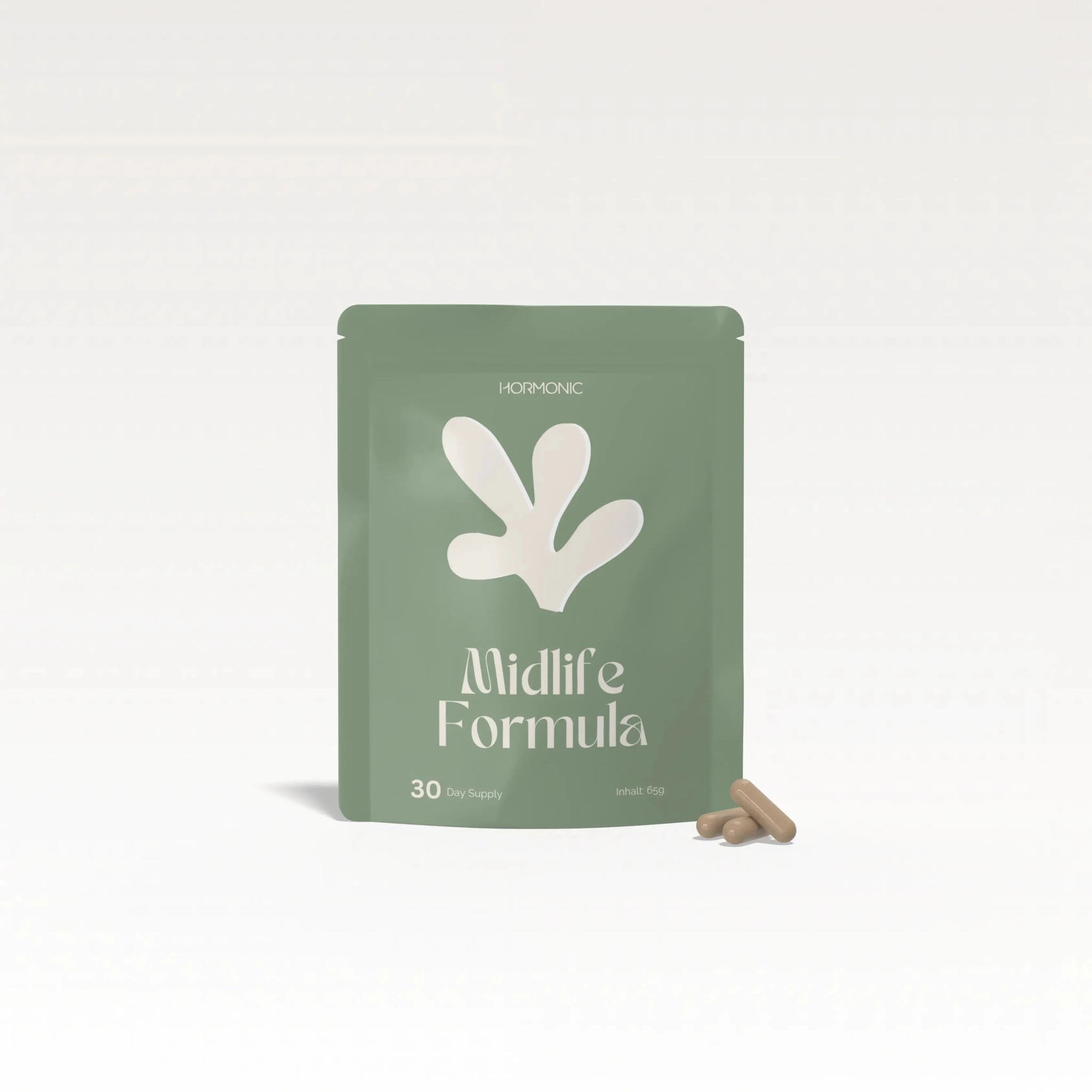
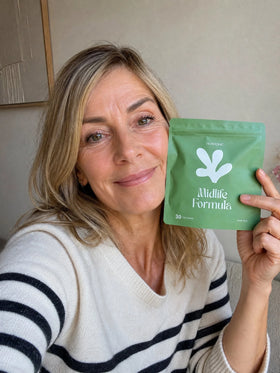
The Midlife Formula combines nine substances for the years around menopause: genistein from red clover, saffron extract, creatine, L-theanine, wild yam, quercetin, resveratrol, astaxanthin, and apigenin. A meta-analysis of nine clinical studies on red clover isoflavones is available, describing an effect on hot flashes. Developed by female doctors, manufactured in Germany.

Discover Midlife Formula

How you can tell it's starting

The sequence is fixed, and it does not begin where most people expect. First, the cycle changes, and only after that do vasomotor symptoms, such as hot flashes and night sweats, occur. The international staging system explicitly classifies these as belonging to late perimenopause and early postmenopause.

In practical terms, this means: If your cycle has been varying between 24 and 33 days for a few months, you are right in the middle of it, even without a single hot flash. A difference of seven days or more between consecutive cycles is the first hard criterion. A cycle calendar is more useful here than any lab test.

A 2025 survey of 2,500 working women between the ages of 40 and 62 shows how frequent individual symptoms are: hot flashes 62 percent, sleep disorders 58 percent, irritability 48 percent, physical or mental exhaustion 45 percent, inner restlessness 36 percent, depressive mood 35 percent, joint or muscle pain 33 percent, decreased libido 31 percent. 12 percent had no symptoms.

The official women's health portal summarizes it in a "rule of thirds," which I find helpful: About one-third of women feel no different during menopause than before, one-third have annoying but not very severe symptoms, and one-third have symptoms that are truly burdensome.

Two findings from the SWAN study dispel common assumptions. First, sleep: Only in about 15 percent of women did sleep problems actually increase in parallel with the transition. For the rest, they remained stable or increased due to age, unrelated to menopause. Poor sleep during this phase of life is therefore not automatically hormonal. Second, concentration: Processing speed and memory measurably declined during perimenopause, but the decline reversed again in postmenopause (El Khoudary et al., 2019). The frequently cited "brain fog" is real and it is temporary.

Do you need a blood test?

If you are over 45 and otherwise healthy: no. The British NICE guidelines state this unusually clearly. For women over 45 with menopausal symptoms, perimenopause should be diagnosed based on hot flashes and irregular cycles, and menopause based on twelve months without bleeding. Without laboratory tests. The German S3 guideline follows the same logic.

Explicitly notto be used for diagnosis in women over 45 are: AMH, inhibin, estradiol, the antral follicle count, and ovarian volume. This is relevant because these are exactly the values included in many test offerings.

Measurement is useful in three situations: for women between 40 and 45 with symptoms including cycle changes, for women under 40 with suspected premature ovarian insufficiency, and for women without an assessable bleeding pattern, such as after a hysterectomy. In these cases, FSH is measured, and if premature ovarian insufficiency is suspected, it is repeated after four to six weeks.

One point that is repeatedly overlooked: according to guidelines, FSH should not even be used for diagnosis if taking combined hormonal contraception, because the result is meaningless. Which values are useful and when can be found in the Overview of hormone status in women, and how much a determination costs is in the article Hormone test for women.

Am I in yet? That can be cleared up in 15 minutes.

Irregular cycles, sleep problems, inner restlessness: whether this is the transition is usually determined through a consultation rather than in the lab. In a free initial consultation, our doctors will look at your cycle history, your symptoms, and your medical background and tell you what the next sensible steps are. Conveniently via video call, with no waiting times at all.

For a free initial consultation

What changes after menopause

The transition ends, but the changes do not. After menopause, the body adjusts to a permanently lower estrogen level. Four areas have been well studied, and in three of them, the reality is different from what is usually claimed.

The bones.The SWAN cohort has tracked bone loss over years. The loss begins about a year before the final period and slows down again about two years afterward. Most of it happens in this narrow window: over ten years, women lost an average of 10.6 percent of bone density in the lumbar spine, with 7.38 percent occurring just in those three years around menopause.

Body composition.The same cohort shows that the number on the scale changes less than the ratio behind it. During the transition, body fat increased by about 1.7 percent per year, while lean mass decreased by about 0.2 percent per year. After menopause, both figures leveled off. What remains is the shift, not an endless increase.

Mucous membranes.Unlike hot flashes, urogenital symptoms do not disappear on their own. In the SWAN study, the proportion of women with vaginal dryness rose from 19 percent in the early transition to 34 percent three years after menopause. This is the one area that tends to worsen rather than subside if left untreated, and at the same time, the one discussed least often.

The heart.Discussions here are often too simplistic. An evaluation of 301,438 women shows that it is not menopause itself that increases cardiovascular risk, but rather its onset at an early age. For menopause before 40, the risk was 55 percent higher; between 45 and 49, it was still 12 percent higher; but from 55 onwards, it was 12 percent lower. Experiencing menopause late is actually a cardiovascular advantage.

Conclusion

Menopause is a single day that you can only confirm twelve months later. Therefore, it is not the date that is interesting, but the transition leading up to it: on average seven to eight years, beginning with irregular cycles rather than hot flashes. Over 45, you generally do not need a blood test for this, but rather someone who can assess your cycle history and your symptoms together.

If you want to dive deeper: The complete guide to perimenopause and the menopause transitioncategorizes all phases and symptoms. And if you want to know which herbal approaches are evidence-based, you will find that in our overview of herbal remedies during menopause.

Frequently Asked Questions About Menopause

At what point is someone considered to be in menopause?

Menopause is the final menstrual period, and it can only be determined in retrospect: only after twelve months have passed without bleeding is the date of the last period retrospectively considered the menopause. In Germany, the average age is 51.3 years. The years preceding this, with irregular cycles and initial symptoms, are the perimenopause, and the time thereafter is the postmenopause. Therefore, anyone who is in the midst of symptoms and still bleeding is, strictly speaking, not in menopause, but in the stage before it.

How long does menopause last?

In the SWAN study, frequent hot flashes and night sweats lasted a median of 7.4 years, including 4.5 years after the final menstrual period. How long it lasts for you depends primarily on when it begins: for women whose symptoms started before their final period or during early perimenopause, the median was over 11.8 years. For women who did not start until after menopause, it was 3.4 years. An early onset therefore does not mean that it will be over sooner.

Was sind die ersten Anzeichen der Menopause?
Zuerst verändert sich der Zyklus, nicht die Temperatur. Das erste verlässliche Zeichen ist eine anhaltende Schwankung der Zykluslänge von sieben Tagen oder mehr zwischen aufeinanderfolgenden Zyklen. Später kommen ausgelassene Blutungen mit Pausen von 60 Tagen und mehr dazu. Hitzewallungen sind zwar das bekannteste Symptom und betreffen in der DAK-Befragung 62 Prozent der Frauen, sie kommen bei vielen aber erst später. Häufig sind außerdem Schlafstörungen, Reizbarkeit, Erschöpfung, innere Unruhe und Gelenk- oder Muskelschmerzen. Etwa 12 Prozent der Frauen berichten gar keine Beschwerden.
Kann man die Menopause im Blut nachweisen?
Ab 45 in der Regel nicht, und das ist keine Sparmaßnahme, sondern Leitlinie. Die britische NICE-Empfehlung sagt ausdrücklich, dass die Diagnose über 45 anhand von Zyklusverlauf und Beschwerden gestellt wird und dass AMH, Inhibin, Östradiol, antraler Follikelzählung und Ovarialvolumen dafür nicht geeignet sind. Die Hormonwerte schwanken im Übergang so stark, dass ein einzelner Wert wenig aussagt. Sinnvoll ist eine FSH-Bestimmung vor allem zwischen 40 und 45, unter 40 bei Verdacht auf eine vorzeitige Menopause und dann, wenn sich der Zyklus nicht beurteilen lässt. Unter kombinierter hormoneller Verhütung ist der Wert ohnehin nicht verwertbar.

Scientific Sources

  • Nagel G, Altenburg HP, Nieters A, Boffetta P, Linseisen J (2005). Reproductive and dietary determinants of the age at menopause in EPIC-Heidelberg. Maturitas 52(3-4):337-347. doi:10.1016/j.maturitas.2005.05.013
  • Menopausal status and factors affecting cessation of menses in the region of Bonn, Germany (2007). Central European Journal of Medicine. doi:10.2478/s11536-007-0017-3
  • Harlow SD, Gass M, Hall JE et al. (2012). Executive summary of the Stages of Reproductive Aging Workshop +10: addressing the unfinished agenda of staging reproductive aging. J Clin Endocrinol Metab 97(4):1159-1168. doi:10.1210/jc.2011-3362
  • Panay N, Anderson RA, Bennie A et al. (2024). Evidence-based guideline: premature ovarian insufficiency. Hum Reprod Open 2024(4):hoae065. doi:10.1093/hropen/hoae065
  • Avis NE, Crawford SL, Greendale G et al. (2015). Duration of menopausal vasomotor symptoms over the menopause transition. JAMA Intern Med 175(4):531-539. doi:10.1001/jamainternmed.2014.8063
  • Paramsothy P, Harlow SD, Nan B et al. (2017). Duration of the menopausal transition is longer in women with young age at onset: the multiethnic Study of Women's Health Across the Nation. Menopause 24(2):142-149. doi:10.1097/GME.0000000000000736
  • Zhu D, Chung HF, Pandeya N et al. (2018). Relationships between intensity, duration, cumulative dose, and timing of smoking with age at menopause: A pooled analysis of individual data from 17 observational studies. PLoS Med 15(11):e1002704. doi:10.1371/journal.pmed.1002704
  • Mishra GD, Pandeya N, Dobson AJ et al. (2017). Early menarche, nulliparity and the risk for premature and early natural menopause. Hum Reprod 32(3):679-686. doi:10.1093/humrep/dew350
  • Zhu D, Chung HF, Pandeya N et al. (2018). Body mass index and age at natural menopause: an international pooled analysis of 11 prospective studies. Eur J Epidemiol 33(8):699-710. doi:10.1007/s10654-018-0367-y
  • van Asselt KM, Kok HS, Pearson PL et al. (2004). Heritability of menopausal age in mothers and daughters. Fertil Steril 82(5):1348-1351. doi:10.1016/j.fertnstert.2004.04.047
  • Vriens IJH, De Bie AJR, Aarts MJB et al. (2017). The correlation of age with chemotherapy-induced ovarian function failure in breast cancer patients. Oncotarget 8(7):11372-11379. doi:10.18632/oncotarget.14532
  • Greendale GA, Sowers M, Han W et al. (2012). Bone mineral density loss in relation to the final menstrual period in a multiethnic cohort: results from the Study of Women's Health Across the Nation (SWAN). J Bone Miner Res 27(1):111-118. doi:10.1002/jbmr.534
  • Greendale GA, Sternfeld B, Huang M et al. (2019). Changes in body composition and weight during the menopause transition: a population-based cohort study. JCI Insight 4(5):e124865. doi:10.1172/jci.insight.124865
  • Waetjen LE, Crawford SL, Chang PY et al. (2018). Factors associated with developing vaginal dryness symptoms in women transitioning through menopause: a longitudinal study. Menopause 25(10):1094-1104. doi:10.1097/GME.0000000000001130
  • Zhu D, Chung HF, Dobson AJ et al. (2019). Age at natural menopause and risk of incident cardiovascular disease: a pooled analysis of individual patient data across 15 observational studies. Lancet Public Health 4(11):e553-e564. doi:10.1016/S2468-2667(19)30155-0
  • Greendale GA, Huang MH, Wight RG et al. (2009). Effects of the menopause transition and hormone use on cognitive performance in midlife women. Neurology 72(21):1850-1857. doi:10.1212/WNL.0b013e3181a71193
  • Kravitz HM, Zhao X, Bromberger JT et al. (2008). Sleep disturbance during the menopausal transition in a multi-ethnic community sample of women. Sleep 31(7):979-990. doi:10.5665/sleep/31.7.979
  • National Institute for Health and Care Excellence (2024). Menopause: identification and management. NICE guideline NG23
  • German Society of Gynecology and Obstetrics (2020). S3 Guideline on Peri- and Postmenopause: Diagnostics and Interventions. AWMF Registry Number 015-062
  • DAK-Gesundheit (2025). Menopause White Paper: Results of an online survey of 2,500 women
  • Federal Centre for Health Education. Menopause: progression, symptoms and treatment. frauengesundheitsportal.de

About the Author

Lisa Maria Emmer

Lisa Maria Emmer

Founder · Physician · Hormonic

Lisa Maria Emmer is co-founder and medical director at Hormonic. She supports women with hormonal problems every day and specializes in cycle health, PCOS, and menopause.

Note: This article is based on current guidelines and scientific work (as of 2026). It is for informational purposes only and does not replace medical advice, diagnosis, or treatment.

Share

You might also be interested in this.

Perimenopause vs. Menopause: Die Unterschiede verständlich erklärt - Hormonic
WechseljahreJan 17, 20269 min read
Perimenopause vs. Menopause: Understanding the Differences

Hot flashes, mood swings, sleep disturbances: Could this be menopause already? We explain the difference between perimenopause and menopause in an easy-to-understand way.

Hitzewallungen: Was im Körper passiert und was wirklich hilft - Hormonic
WechseljahreJun 1, 20268 min read
Hot flashes: What happens in the body and what really helps

Hot flashes during and before menopause: What happens hormonally, which measures truly help, and when other causes should be investigated.
Pflanzliche Mittel in den Wechseljahren: Was wirklich hilft - Hormonic
WechseljahreNov 16, 20256 min read
Plant compounds during menopause

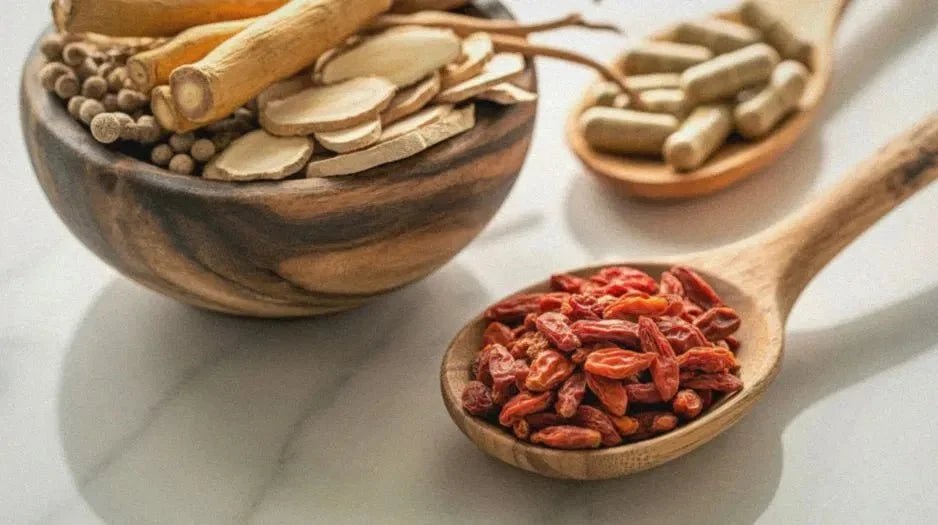
What helps with hot flashes, mood swings, or trouble sleeping? Studies show these plant-based compounds can support you through menopause.