Offer ends in10:00

Cart

Your cart is empty

Continue shopping

Trending searches

Featured products

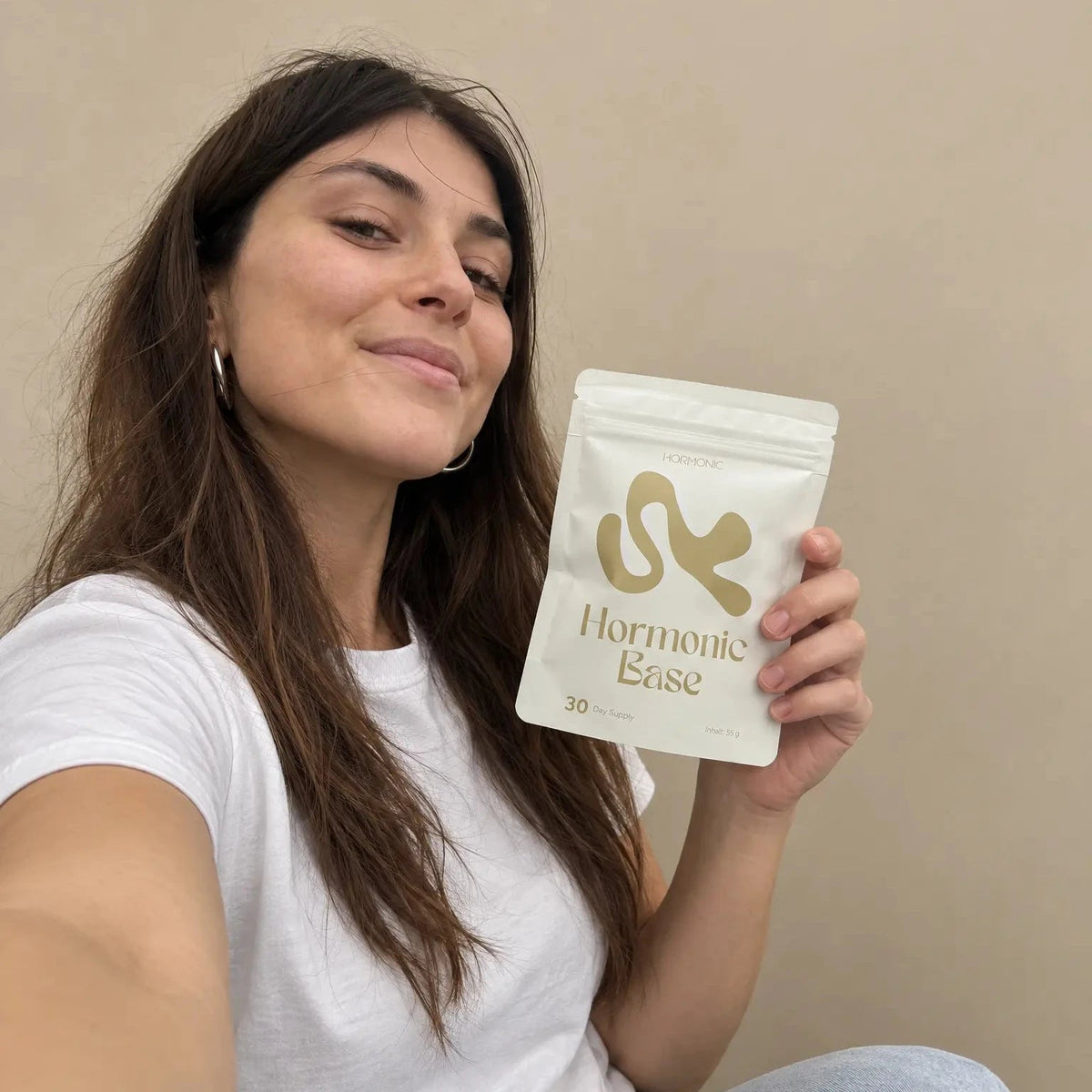
Hormonic Base - Hormonic - Nahrungsergänzungsmittel
Sale price€65,00
(5.0)
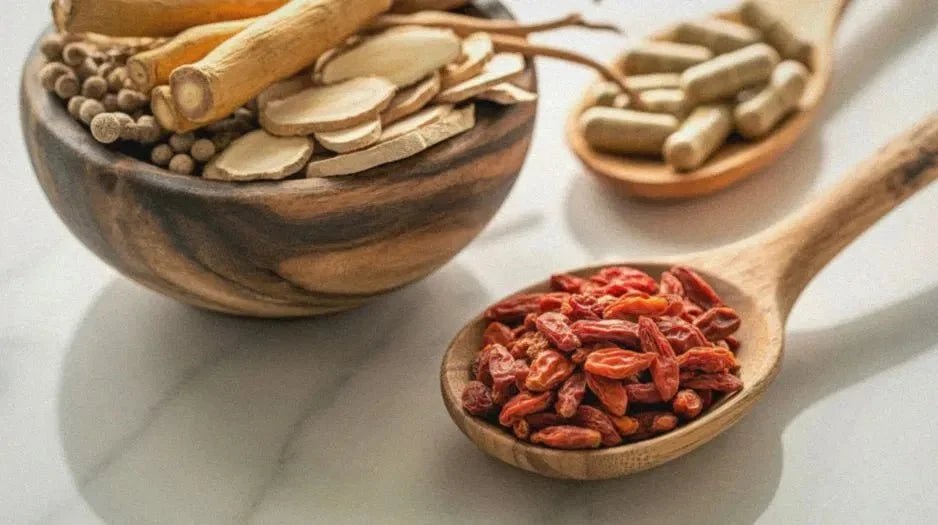
Midlife Formula - Hormonic - Nahrungsergänzungsmittel
Sale price€75,00
(5.0)
Pflanzliche Mittel in den Wechseljahren: Was wirklich hilft - Hormonic
WechseljahreNov 16, 20256 min read

Plant compounds during menopause

This article is part of: Perimenopause and Menopause: The Complete Medical Guide

When I laid out the studies on herbal menopause remedies side by side, one thing particularly surprised me: the often vast discrepancy between advertising promises and the actual data, and how robustly a classic like red clover now stands. Those looking for herbal remedies during menopause usually want to know what truly helps with hot flashes, sleep, and mood without immediately resorting to hormones. That's exactly what we honestly assess here.

How do herbal remedies work in menopause?

Herbal remedies target different areas, which is precisely why not every remedy suits every symptom. Phytoestrogens, like isoflavones, are similar in structure to the body's own estrogen and can weakly bind to estrogen receptors. Other plant compounds, especially black cohosh, are thought to act via neurotransmitters in the brain rather than through hormone balance.

During menopause, estrogen levels drop, which can trigger hot flashes, sleep disturbances, and mood swings. Herbal approaches attempt to mitigate these effects without introducing hormones. The effect is generally milder than hormone therapy, but for many women, the barrier to trying them is lower.

Herbal Remedy Researched for What studies show
Red Clover Isoflavones Hot flashes Meta-analysis 2024: significant, small to moderate reduction
Soy Isoflavones Hot flashes, discomfort Meta-analysis 2024: small but significant effect
Black Cohosh Hot flashes, sweating Mixed: reviews positive, Cochrane cautious
Sage Sweating Limited, partly positive studies
St. John's Wort Mild low moods Effective, but many interactions
Wild Yam Advertised as progesterone substitute Weak evidence, no conversion in the body
Did you know?

Red clover contains two isoflavones, formononetin and biochanin A, which are not present in soy at all. These additional plant compounds could explain why red clover shows distinct effects in studies on hot flashes.

Phytoestrogens: Red Clover and Soy

Isoflavones are the most thoroughly researched phytoestrogens. A GRADE-rated meta-analysis published in 2024, comprising nine randomized studies, found a statistically significant reduction in hot flash frequency with a small to moderate effect for red clover. In addition to daidzein and genistein, red clover also contains formononetin and biochanin A, isoflavones not found in soy.

A 2024 meta-analysis also showed a small but significant benefit of soy isoflavonesfor menopausal symptoms. In practical terms, this means that isoflavones are not a miracle cure, but they are among the few plant-based options with robust, positive evidence, especially for hot flashes. The effect builds up over several weeks.

Black Cohosh (Cimicifuga)

Black cohosh is the classic among herbal menopausal remedies and is also available as an approved medicine in Germany. However, the evidence is inconsistent: a 2023 review indicated a possible benefit for hot flashes, while an older Cochrane analysis found no clear advantage over placebo. The mechanism of action is interesting, as Cimicifuga likely does not act via estrogen, but rather via neurotransmitters such as serotonin. This also makes it interesting for women who wish to avoid estrogens, but it should always be discussed with a doctor.

Sage, St. John's Wort, and Wild Yam

Sageis traditionally used for excessive sweating, and smaller studies suggest a benefit for hot flashes. St. John's wortcan help with mild depressive moods, which are more common during menopause. Important: St. John's wort has numerous interactions, including with the pill, blood thinners, and antidepressants, and should therefore be used under medical supervision. Wild yamis often marketed as natural progesterone, but the body cannot convert the contained substance diosgenin into progesterone, and the evidence is accordingly weak.

The most promising plant compounds, combined

Instead of a single extract, our Midlife Formula combines physician-selected botanicals, including red clover isoflavones and saffron, for which there are promising studies regarding menopausal symptoms, supplemented with additional micronutrients for this life stage.

Discover Midlife Formula

Are phytoestrogens the same as plant-based hormones?

No. Phytoestrogens are plant compounds that resemble estrogen and bind more weakly to its receptors, but they are not hormones. Bioidentical or prescription hormones are different and should be discussed with a doctor. When people look for plant-based hormones, they almost always mean phytoestrogens like isoflavones. You can find more about the overall nutrient situation in our overview of Nutrients in Menopause, and an overview of all symptoms is provided by the Typical Menopausal Symptoms.

What you can do in everyday life

Herbal remedies work best as part of a calm overall approach. A plant-based diet with natural sources of isoflavones such as soy products, flaxseed, and legumes provides phytoestrogens incidentally. Regular exercise, especially with strength training, good sleep, and stress reduction also help alleviate hot flashes and mood swings. And because herbal remedies require patience, it is worth giving a preparation a few weeks before you evaluate it.

If symptoms persist strongly, it is not a failure, but a signal. Then it is worth considering targeted plant compounds in tested dosages or a medical consultation about hormone therapy.

The complete menopause routine

If you want your daily foundation and targeted midlife support together, the Midlife Bundle combines the Midlife Formula with the Hormonic Base, coordinated and with a price advantage.

View Midlife Bundle

Conclusion

Herbal remedies can make menopause noticeably more pleasant, especially for mild to moderate symptoms. Isoflavones from red clover and soy have the best evidence, while black cohosh is worth a try, but its effects are inconsistent. All of them work gently and require patience. If symptoms remain severe, a hormone therapy discussed with a doctor is not a contradiction, but the next sensible option.

Frequent Questions about Herbal Remedies for Menopause

Which herbal remedy works best for hot flashes?

The best study data is available for isoflavones from red clover and soy. Meta-analyses from 2024 show a small to moderate, but significant reduction in the frequency of hot flashes. The effect builds up over several weeks.

Are herbal remedies an alternative to hormone therapy?

For mild to moderate symptoms, herbal remedies may be an option. However, their effect is usually milder than that of hormone therapy. For severe symptoms, hormone therapy should be discussed with a doctor.

Sind pflanzliche Wechseljahre-Mittel ohne Nebenwirkungen?

Nein. Auch pflanzliche Mittel können Nebenwirkungen und Wechselwirkungen haben, Johanniskraut zum Beispiel mit der Pille und vielen Medikamenten. Bei Vorerkrankungen oder Medikamenteneinnahme immer ärztlich abklären.

Sind Phytoöstrogene dasselbe wie Hormone?

Nein. Phytoöstrogene sind Pflanzenstoffe, die dem Östrogen ähneln und schwächer an dessen Rezeptoren binden. Sie sind keine Hormone und wirken deutlich milder.

Scientific Sources

  • Trifolium pratense (Red Clover) for hot flashes: GRADE-assessed systematic review and meta-analysis (2024, 9 RCTs).
  • Soy isoflavones for menopausal symptoms: systematic review and meta-analysis (2024), PMC12296567.
  • Leach MJ, Moore V (2012). Black cohosh (Cimicifuga spp.) for menopausal symptoms. Cochrane Database of Systematic Reviews.
  • AWMF S3 Guideline Peri- and Postmenopause: Diagnostics and Therapy (Reg. No. 015-062).

About the Author

Amelie Weiss

Research Fellow, PhD · Hormonic

Amelie Weiss is a Research Fellow at Hormonic and conducts scientific research on hormonal health, micronutrients, and evidence-based women's health.

This article is for informational purposes only (last updated September 2026) and does not replace medical advice, diagnosis, or treatment. For severe menopausal symptoms or before taking herbal remedies, especially if you are taking medication, please consult your doctor.

Share

You might also be interested in this.

Wechseljahre-Symptome: die 34 typischen Anzeichen erkennen - Hormonic
WechseljahreOct 29, 202511 min read
Perimenopause symptoms: the 34 signs of menopause

Recognizing Menopause Symptoms: The 34 Typical Signs from Hot Flashes to Joint Pain, Organized into Five Groups, with the Hormonal Background and What Really Helps You.

Nahrungsergänzung in den Wechseljahren: Was wirklich sinnvoll ist - Hormonic
MikronährstoffeJun 27, 202610 min read
Dietary supplements in menopause: What really makes sense

Which supplements are really useful during menopause: from vitamins D, K2, and magnesium to saffron and resveratrol, honestly assessed based on scientific studies.
Mönchspfeffer Wirkung: Was die Studien wirklich zeigen - Hormonic
MikronährstoffeSep 12, 202616 min read
Chasteberry Benefits: What the Studies Really Show

Chasteberry works for PMS, and the studies on it are better than its reputation suggests. However, this effect is attributed to a specific extract at a specific dose, not the plant itself. What thi...