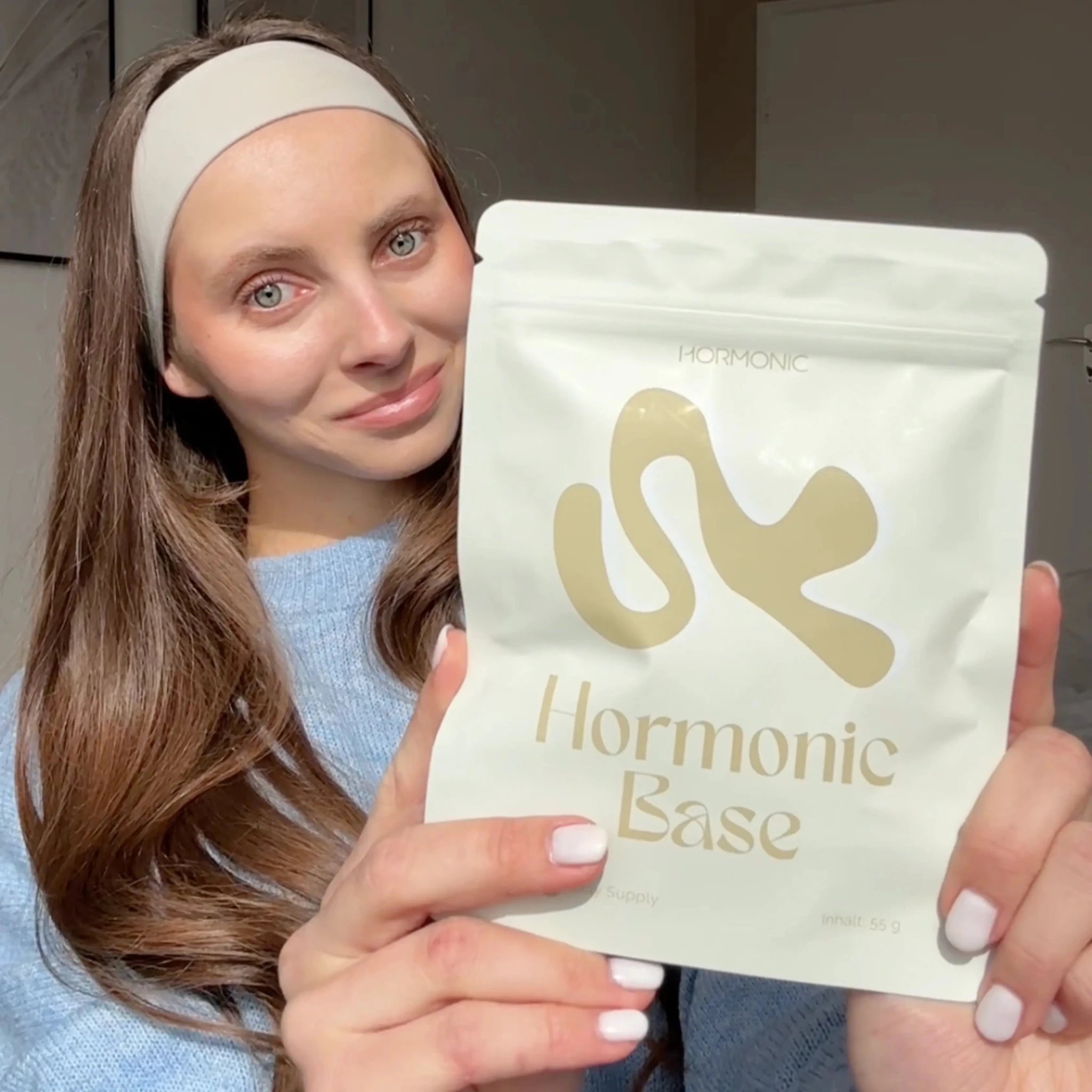
Welcome to Hormonic – a woman-founded startup dedicated to revolutionizing women's hormonal health. With a science-backed personalized approach, we want to help women restore and maintain their hormonal balance, thereby sustainably improving their quality of life.
Our unique concept of “synsupplementation” combines carefully selected natural ingredients that work in synergy for maximum impact. Instead of masking symptoms, we address the root causes of hormonal imbalances and support the body’s own hormone production – offering a natural alternative to synthetic treatments.
Beyond our products, we provide personalized coaching with specialized physicians. Together, we identify your individual challenges – whether PCOS, endometriosis, fertility, coming off birth control, or simply wanting to maintain balance long term – and create tailored solutions. We look at the whole picture: nutrition, stress, lifestyle, and environmental factors.
At the heart of Hormonic is education. We believe knowledge is power – and that informed women can make better choices for their health. That’s why we share clear, science-based resources that empower women to take prevention and self-care into their own hands.
Our vision is simple yet bold: a future where women live free from hormonal imbalances, fully in their strength, and in control of their health. With Hormonic, you’re not just managing symptoms – you’re transforming your wellbeing, naturally and sustainably.
The Sex Hormones: Estrogen, Progesterone & Testosterone
The three classic sex hormones determine the menstrual cycle, as well as skin, bones, mood, and libido. They work in interplay: what one builds up, the other balances out.
Estrogen
Estrogen (especially estradiol) dominates the first half of the cycle. It builds up the uterine lining, supports bones, the cardiovascular system, and skin, and influences well-being. If there is too little of it, for example during perimenopause, this can lead to cycle changes, hot flashes, and dry skin. More on this in the article on Estrogen Deficiency: Symptoms and Causes. Conversely, the term Estrogen Dominancedescribes a relative excess of estrogen compared to progesterone.
Progesterone
Progesterone is the hormone of the second half of the cycle. After ovulation, it is formed in the corpus luteum, stabilizes the uterine lining, and prepares the body for a possible pregnancy. It also has a calming and sleep-promoting effect. If ovulation does not occur or if the luteal phase is shortened, a Progesterone Deficiencycan arise, which can manifest itself in PMS, sleep problems, and menstrual irregularities, among other things.
Testosterone and Androgens
The female body also produces testosterone and other androgens, albeit in smaller amounts. They are important for libido, muscle strength, energy, and drive. An excess, as in PCOS, can manifest as acne, increased body hair, and hair loss on the head, as described in the article on Naturally Lowering Testosterone in PCOS. Too little, for example during menopause, can dampen drive and desire, see Recognizing Testosterone Deficiency in Women.
Metabolic and Stress Hormones: Insulin, Cortisol & Thyroid
Sex hormones never act in isolation. They are closely linked to the hormones that regulate energy, stress, and metabolism. This interplay explains why factors such as sleep, nutrition, and stress so strongly influence the cycle.
Insulin and Blood Sugar
Insulin transports glucose from the blood into the cells. If the cells respond less effectively to it, this is referred to as insulin resistance. The body then releases more insulin, which can stimulate the ovaries to produce more androgens and at the same time lower the binding protein SHBG. Studies have shown that this mechanism plays a central role in PCOS. You can read how insulin resistance manifests in womenin the corresponding article.
Cortisol and the Stress Axis
Cortisol is produced in the adrenal gland and controlled via the Hypothalamic-Pituitary-Adrenal (HPA) axis. It regulates blood sugar, inflammatory reactions, and the sleep-wake rhythm. In cases of persistent stress, chronically elevated cortisol levels can affect the higher-level control of sex hormones (HPO axis) and thus disrupt the cycle. The article Lowering Cortisol: What Really Helpssummarizes what truly helps here.
The Thyroid
The thyroid hormones T3 and T4, controlled by TSH from the pituitary gland, regulate the entire basal metabolic rate. Both an underactive and an overactive thyroid can alter the cycle, disrupt ovulation, and affect fertility. Because the thyroid and the cycle are so closely intertwined, it's worth taking a look at the Thyroid Guide for Women.
Neurotransmitters: Serotonin and Leptin
In addition to classic hormones, neurotransmitters such as serotonin, which co-determines mood, sleep, and satiety and fluctuates with the cycle, as well as leptin, the satiety hormone from fat tissue that signals the energy status to the brain, are also at work. They too are part of the overall hormonal picture.
Unsure where to start?
In a free 15-minute introductory call, we'll address your questions about your hormones and show you potential next steps – no obligation and tailored to you.
The Control Center: LH, FSH, and Their Interaction
Above all, there is a control center in the brain. The hypothalamus releases the signal GnRH, and the pituitary gland responds with the control hormones LH (luteinizing hormone) and FSH (follicle-stimulating hormone). FSH stimulates follicle maturation, and an increase in LH triggers ovulation. This interplay between the brain and ovaries is called the HPO axis.
Another pituitary hormone is prolactin. It controls milk production but can suppress ovulation if levels are persistently elevated, thus disrupting the cycle. Because all these axes – the HPO axis for sex hormones, the HPA axis for stress, and the thyroid axis – share the same control center, a disturbance in one system often affects the others.
How to Support Your Hormones
Hormones cannot be balanced at the push of a button, but lifestyle sets important parameters. What research repeatedly emphasizes:
- Keep blood sugar stable:Protein and fiber with every meal relieve the insulin system.
- Take sleep and stress seriously:Rest reduces cortisol load and indirectly supports sex hormones.
- Exercise regularly:Strength and endurance training improve insulin sensitivity.
- Ensure nutrient supply:Micronutrients are co-factors in many hormonal processes. For example, vitamin B6 contributes to the regulation of hormonal activity, and vitamin D and zinc are involved in metabolism and reproduction.
- Know your levels:A blood test provides an assessment of where you stand before you take targeted action.
A well-nourished body has the best conditions for stable hormonal interaction. It remains important: For persistent symptoms, clarification should be sought from a doctor.
Delve deeper: The individual hormones in detail