

Cart

Your cart is empty

Continue shopping

Trending searches

Featured products

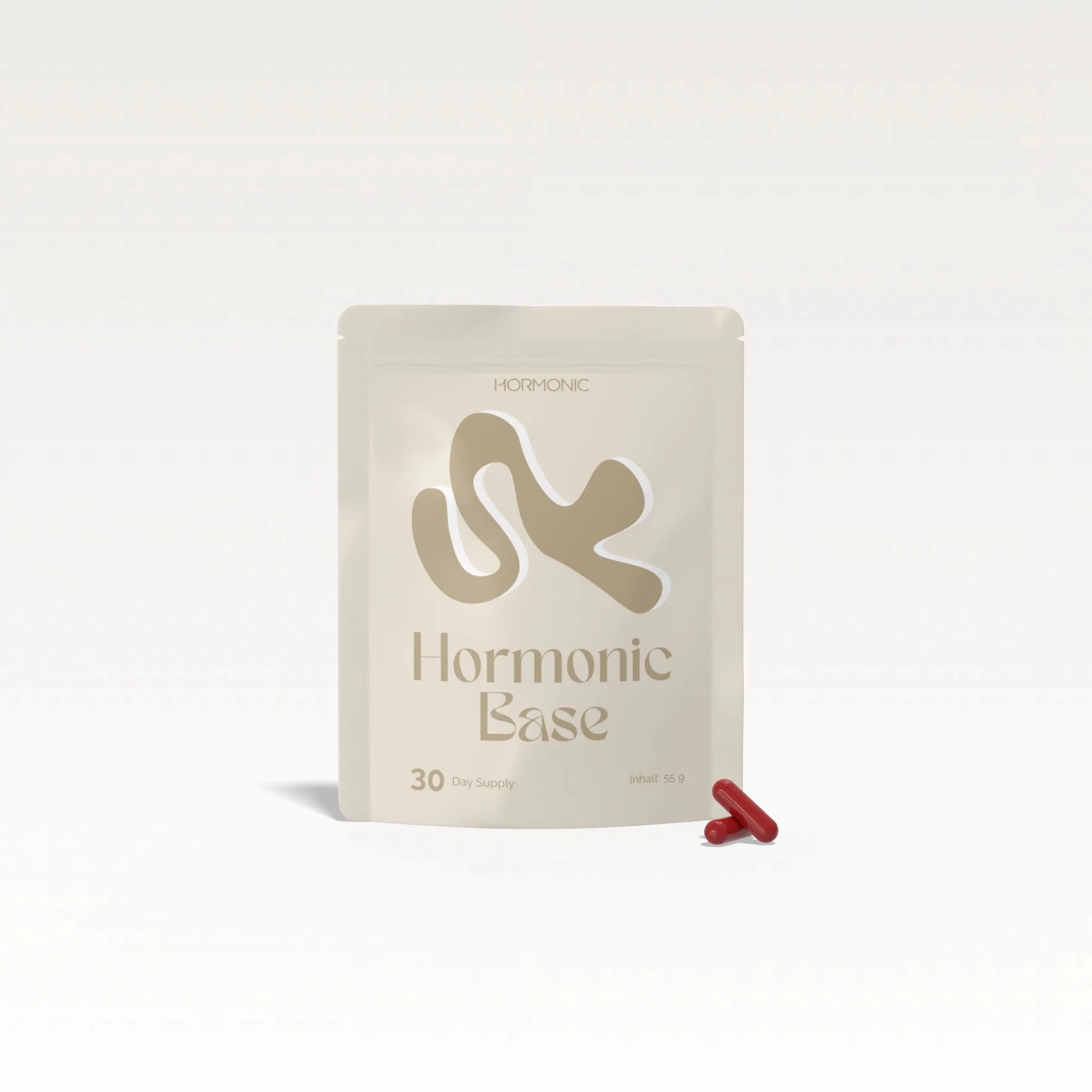
Hormonic Base - Hormonic - Nahrungsergänzungsmittel
Sale price€65,00
(5.0)
Midlife Formula - Hormonic - Nahrungsergänzungsmittel
Sale price€75,00
(5.0)
Alles, was du über deine Eizellen wissen musst - Hormonic
FruchtbarkeitJul 21, 20246 min read

Everything you need to know about your eggs

This article is part of: Fertility Boost: How Nutrition and Supplements Can Improve the Chances of Getting Pregnant

When I first looked into the egg reserve from a scientific angle, one figure surprised me: you had the most eggs when you were still a tiny foetus in your mother's belly. From that point on it only goes downhill, entirely naturally and independently of your lifestyle.

In this article we look at how many eggs a woman actually has, how the reserve changes over a lifetime, and why widespread myths, such as the one about the contraceptive pill, are so persistent. I put the facts in context, honestly and without scaremongering.

How many eggs does a woman have?

The number changes considerably over the course of life. Around the 20th week of pregnancy a female foetus reaches its peak with about 6 to 7 million eggs. At birth there are still around 1 to 2 million, by puberty about 300,000 to 500,000, and by menopause only a few thousand. Across the entire fertile life, on average only around 400 to 500 eggs are actually released, while the large remainder breaks down naturally.

Life stage Approximate number of eggs
20th week of pregnancy about 6 to 7 million
Birth about 1 to 2 million
Puberty about 300,000 to 500,000
Menopause only a few thousand

Why you have only a limited number of eggs

Unlike men, who continuously produce new sperm from puberty onwards, the female store is set from the very beginning. The precursors of the eggs, the primordial follicles, reach their maximum while still in the womb. From then on their number declines continuously, a process that runs independently of contraception, pregnancies or lifestyle (Wallace and Kelsey, 2010).

In every cycle, many follicles are recruited at the same time and begin to mature. But usually only one wins the race to ovulation; all the others break down in the process known as atresia. That is why, across an entire lifetime, only around 400 to 500 eggs are released, even though hundreds of thousands were laid down.

Eggs and age: how fertility changes

The decline of the reserve is not steady. From around the mid-30s the loss accelerates, and the quality of the eggs also decreases more markedly (Faddy et al., 1992; te Velde and Pearson, 2002). Most women are most fertile between their mid-20s and mid-30s. Once the store is finally exhausted, the ovaries stop producing oestrogen and menopause begins, on average around the age of 51.

At-Home Hormone Check-In Kit: AMH and more

Anti-Müllerian hormone gives an indication of your egg reserve. With the At-Home Hormone Check-In Kit you measure relevant hormone levels conveniently from home and receive wellness guidance. For more clarity about your current hormonal status.

€289,00

View the Hormone Check-In Kit

The pill myth: does contraception save eggs?

One of the most common questions is: if the pill suppresses ovulation, are eggs saved for later? The answer is no. Even on the pill, follicles are recruited every cycle. They do not mature all the way to ovulation but break down in atresia. So nothing is saved, and menopause is not pushed back as a result.

How is the egg reserve measured?

The most important lab value is anti-Müllerian hormone (AMH). It is produced by small, maturing follicles and, through a simple check, gives an indication of the remaining reserve (Dewailly et al., 2014; Moolhuijsen and Visser, 2020). In addition, antral follicles are counted by ultrasound. Important to know: AMH estimates the quantity, not the quality of the eggs, and is not an exact fertility test (Broer et al., 2014).

If you would like an indication of your current status, you can have relevant hormone levels conveniently checked from home with the At-Home Hormone Check-In Kit, including wellness guidance. You cannot change the number of your eggs, but you can support their quality through your lifestyle. You can read how in our article on improving egg quality, and which nutrients matter around trying to conceive under nutrients for fertility.

Questions about your egg reserve and fertility?

In a free 15-minute intro call, our wellness team helps you make sense of your questions about AMH, egg reserve and trying to conceive, with no obligation. Conveniently from home, with no waiting times.

Secure your free intro call

Conclusion

Your egg reserve is set at birth and declines throughout life. That cannot be changed and is not a cause for concern, but a natural process. What can be influenced is not the number, but to some extent the quality of the eggs and the regularity of ovulation. If you would like to understand your own status better, the AMH value offers a first indication, and a conversation with a health professional can help you put it in context.

Frequently asked questions about eggs and egg reserve

How many eggs does a woman have?

The number changes considerably. Around the 20th week of pregnancy the peak is about 6 to 7 million eggs, and at birth there are still around 1 to 2 million. By puberty about 300,000 to 500,000 remain, and by menopause only a few thousand. Across a lifetime only around 400 to 500 are released.

Can you increase the number of eggs?

No. The number of eggs is set at birth and declines throughout life; the body cannot form new eggs. What can be influenced is not the number, but to some extent the quality of the eggs and the regularity of ovulation, through a healthy lifestyle.

Does the contraceptive pill save eggs?
No, that is a myth. Even on the pill, eggs are recruited every cycle and break down instead of being released. So no eggs are saved for later, and the pill does not postpone menopause.
How can I have my egg reserve assessed?
An important marker is anti-Müllerian hormone (AMH), which gives an indication of the remaining egg reserve. In addition, the number of antral follicles is counted by ultrasound. Both values estimate the reserve but say nothing about egg quality.

Scientific Sources

  • Wallace, W. H. B. & Kelsey, T. W. (2010). Human Ovarian Reserve from Conception to the Menopause. PLoS ONE, 5(1), e8772. doi:10.1371/journal.pone.0008772
  • Faddy, M. J. et al. (1992). Accelerated disappearance of ovarian follicles in mid-life: implications for forecasting menopause. Human Reproduction, 7(10), 1342-1346. doi:10.1093/oxfordjournals.humrep.a137570
  • te Velde, E. R. & Pearson, P. L. (2002). The variability of female reproductive ageing. Human Reproduction Update, 8(2), 141-154. doi:10.1093/humupd/8.2.141
  • Dewailly, D. et al. (2014). The physiology and clinical utility of anti-Müllerian hormone in women. Human Reproduction Update, 20(3), 370-385. doi:10.1093/humupd/dmt062
  • Broer, S. L. et al. (2014). Anti-Müllerian hormone: ovarian reserve testing and its potential clinical implications. Human Reproduction Update, 20(5), 688-701. doi:10.1093/humupd/dmu020
  • Moolhuijsen, L. M. E. & Visser, J. A. (2020). Anti-Müllerian Hormone and Ovarian Reserve: Update on Assessing Ovarian Function. Journal of Clinical Endocrinology & Metabolism, 105(11), 3361-3373. doi:10.1210/clinem/dgaa513

About the Author

Amelie Weiss

Amelie Weiss

Research Fellow, PhD · Hormonic

Amelie Weiss is a Research Fellow at Hormonic and conducts scientific research on hormonal health, micronutrients, and evidence-based women's health.

Note: This article is based on current guidelines and scientific work (as of 2026). It is for informational purposes only and does not replace medical advice, diagnosis, or treatment.

Share

You might also be interested in this.

Eizellqualität verbessern: Was wirklich funktioniert - Hormonic
FruchtbarkeitOct 24, 20248 min read
Improve Egg Quality: What Really Works

The quality of your eggs is one of the most important factors for fertility and directly impacts the chances of a successful pregnancy. Women are born with a limited egg reserve – around 1 to 2 mil...

Natürlich die Fruchtbarkeit steigern - Hormonic
FruchtbarkeitSep 15, 20258 min read
Increase fertility naturally

15-25% of Western couples are affected by fertility problems. Here's what really helps and which natural measures can improve fertility.

Kinderwunsch? Diese Nährstoffe machen laut Studien den Unterschied - Hormonic
FruchtbarkeitOct 21, 20249 min read
Fertility Boost: How Nutrition and Supplements Can Improve the Chances of Getting Pregnant

Which nutrients really help with fertility? We provide an evidence-based classification of folic acid, CoQ10, myo-inositol, omega-3, and diet, for women and men.