

Looking at popular cycle apps, I noticed something: everything revolves around ovulation. Fertile days, ovulation symptoms, the perfect timing. And then there are those two quiet weeks afterward that almost no one talks about, even though they make up half your cycle and often determine more about your sleep, mood, and skin than any other phase.
These two weeks are the luteal phase. Once you understand it, a lot of things suddenly make sense: why you sleep differently the week before your period, why cravings kick in, why your mood can swing, and what's behind it when the second half of your cycle is too short. That is exactly what this is about.
What is the luteal phase?
The luteal phase is the segment of your cycle between ovulation and your next period, i.e., the entire second half of your cycle. Its name comes from the corpus luteum ("yellow body"): this is the transformed follicle that remains after ovulation and becomes a small, temporary hormone gland.
This is how the luteal phase fits into your cycle:
| Phase | Cycle Day (approx.) | Lead hormone | What happens |
|---|---|---|---|
| Menstruation | Days 1 to 5 | All low | Bleeding, energy low point |
| Follicular phase | Day 1 to approx. 13 | Estrogen rises | Follicle matures, energy rises |
| Ovulation | approx. day 14 | LH peak | Egg released, most fertile time |
| Luteal phase | approx. days 15 to 28 | Progesterone high | Corpus luteum active, body prepares |
The day counts are guidelines for a 28-day cycle. Your cycle may differ: anything between 21 and 35 days is considered normal, and fluctuations almost always occur in the first half of the cycle. You can find a complete overview of all four phases in our menstrual cycle guide.
How long does the luteal phase last?
The luteal phase typically lasts 10 to 16 days, and 12 to 14 days for most women. It begins the day after ovulation and ends with the first day of your next period. Unlike the first half of the cycle, it is remarkably stable: its duration is determined by the lifespan of the corpus luteum, which operates on a fairly fixed program of about two weeks.
It gets interesting at the margins: a luteal phase that is repeatedly shorter than 10 days can indicate that the corpus luteum is not producing enough progesterone or is giving up too soon. We will take a closer look at what this means and when it becomes relevant further down.
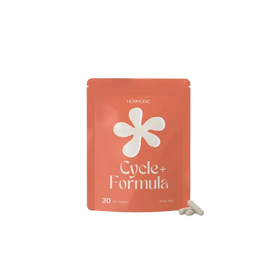
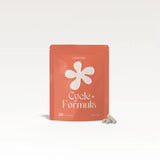
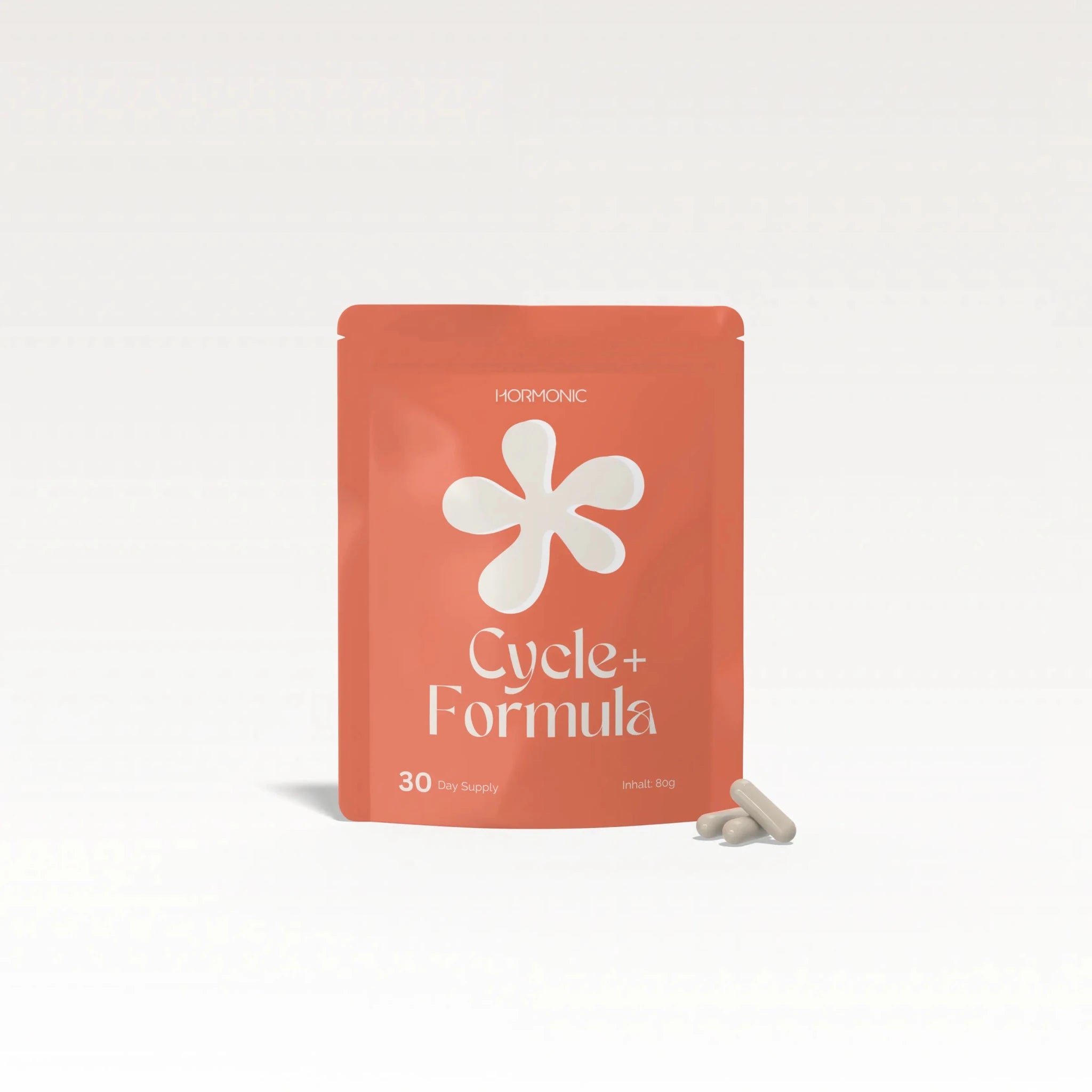
Cycle+ Formula: 8 active ingredients for your ovulation phase
No strong corpus luteum without a good ovulation, and no progesterone without a corpus luteum. That is exactly where Cycle+ comes in: Myo- and D-chiro-inositol have been studied in meta-analyses for supporting ovulation and cycle regulation in PCOS, zinc contributes to fertility and reproduction, complemented by rhodiola and L-theanine from stress research. 8 active ingredients, developed by physicians.
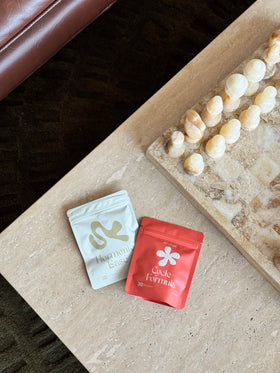
Cycle Bundle: The power duo for hormones and cycle
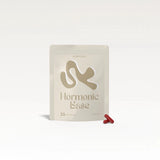
The Cycle Bundle combines the Cycle+ Formula with the Hormonic Base, totaling 24 active ingredients: the ovulation specialists for the first half of your cycle and a foundation of Vitamin B6, which contributes to the regulation of hormonal activity, and a magnesium complex for the days when the luteal phase becomes demanding.
Frequently Asked Questions about the Luteal Phase
How does one feel during the luteal phase?
How long does the luteal phase last?
Kann man in der Lutealphase schwanger werden?
Was sollte man in der Lutealphase machen?
Scientific Sources
- Practice Committee of the American Society for Reproductive Medicine (2021). Diagnosis and treatment of luteal phase deficiency: a committee opinion. Fertility and Sterility. doi:10.1016/j.fertnstert.2021.02.010
- Hantsoo L, Epperson CN (2020). Allopregnanolone in premenstrual dysphoric disorder (PMDD): Evidence for dysregulated sensitivity to GABA-A receptor modulating neuroactive steroids across the menstrual cycle. Neurobiology of Stress. doi:10.1016/j.ynstr.2020.100213
- Pundir J et al. (2018). Inositol treatment of anovulation in women with polycystic ovary syndrome: a meta-analysis of randomised trials. BJOG: An International Journal of Obstetrics and Gynaecology. doi:10.1111/1471-0528.14754
- Wyatt KM et al. (1999). Efficacy of vitamin B-6 in the treatment of premenstrual syndrome: systematic review. BMJ. doi:10.1136/bmj.318.7195.1375
- Parazzini F et al. (2017). Magnesium in the gynecological practice: a literature review. Magnesium Research. PMID: 28392498
- Reed BG, Carr BR (2018). The Normal Menstrual Cycle and the Control of Ovulation. In: Endotext, NCBI Bookshelf.
About the Author

You might also be interested in this.

Luteal phase deficiency explained: how to recognise the symptoms, what causes it, and what truly helps with fertility issues and cycle irregularities.

PMDD is more than severe PMS: the intense, mood-related form of premenstrual discomfort. Learn what happens in the body, how to recognize PMDD, and what studies show truly helps.

From symptoms to the real causes and treatment: the evidence-based overview of PMS, including the remedies with the best scientific evidence.