
Last updated: October 2026
When I compared the latest menopause tests from Stiftung Warentest and Öko-Test side by side, one result particularly surprised me: Out of 23 tested products, Öko-Test only recommended three, and 17 failed completely. This does not mean that herbal approaches are useless, as a test winner often measures something different than what one might expect. Those looking for the "test winner" among herbal hormones want to find the most effective product, and that is precisely where it pays to take a closer look.
Is there a test winner for herbal hormones during menopause?
No, there is no single test winner valid for everyone. Stiftung Warentest, Öko-Test, and commercial comparison portals evaluate different criteria and therefore arrive at different results. In addition, there are many preparations that have not been tested at all. The decisive factor is what question the respective test is actually answering.
The institutes test for evidence of efficacy, the benefit-risk ratio, and sometimes also auxiliary substances, dosages, and warning labels. Commercial portals, on the other hand, often name a "comparison winner" based on packaging, price, and customer reviews, without any real evidence of efficacy. The following overview shows who evaluates what.
| Who tests | What is tested | Key result |
|---|---|---|
| Stiftung Warentest | Evidence of benefit from studies, benefits and risks | Hormonal preparations "suitable," herbal medicinal products "suitable with reservations" |
| Öko-Test | Evidence of efficacy, auxiliary substances, vitamin dosage, warning labels | 3 out of 23 "good," 17 "poor" or "unsatisfactory" |
| Comparison portals | Packaging, price, customer reviews | Select "comparison winners," often without real evidence of efficacy |
Which herbal products performed well in the test?
In the Öko-Test (October 2026), one medicinal product containing black cohosh was rated "good" among the herbal products (Dr. Böhm Traubensilberkerze 6.5 mg). Stiftung Warentest rated herbal medicinal products overall as "suitable with reservations." The overview categorizes the four most common active ingredients by substance rather than brand.
| Active ingredient | What tests and studies show | Status | What to look for |
|---|---|---|---|
| Black cohosh | According to Öko-Test, its efficacy for hot flashes and sweating is considered well-documented for medicinal products, although some approval studies no longer meet current standards. | Approved herbal medicinal product from the pharmacy | Use only for a limited time and with medical advice; check beforehand if you have liver disease |
| Soy and Red Clover isoflavones |
Small studies show effects on hot flashes, and a meta-analysis also shows a small effect on overall symptoms. According to IQWiG, at least 30 mg of isoflavones daily could provide relief. |
According to the consumer center, its efficacy is not conclusively proven | EFSA guidance: 100 mg soy and 43.5 mg red clover per day, maximum 10 or 3 months respectively; not for hormone-dependent cancer |
| Sage | Traditionally used for excessive sweating and can help with this, but is less well-studied. | Tea, extract, or supplement | Check for clearly declared amounts; consider interactions with combination products |
| Chaste tree | Primarily studied for menstrual issues and PMS, less so for hot flashes. | Medicinal product or supplement | More relevant for perimenopause with cycle irregularities than for typical menopause symptoms |
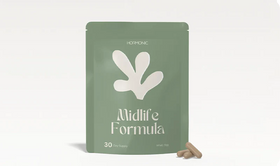
Midlife Formula for your menopause routine
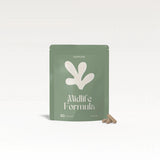
The Midlife Formula was not part of the tests. It combines 9 active ingredients, including red clover and saffron, as a medically developed supplement for your menopause routine and does not replace medical advice.
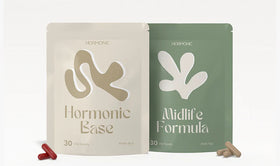
The Power Duo for Women in Menopause
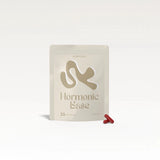
Hormonic Base provides 16 micronutrients, including vitamin B6, which contributes to the regulation of hormonal activity. Midlife Formula adds plant-based ingredients for menopause. 25 active ingredients in one bundle. Developed by doctors with a 30-day money-back guarantee.
Frequent Questions About Menopause Test Winners
What is the test winner among menopause remedies?
What does Ökotest say about menopause supplements?
Sind pflanzliche Hormone laut Stiftung Warentest wirksam?
Worauf sollte ich beim Kauf eines Wechseljahre-Mittels achten?
Scientific Sources
- Stiftung Warentest (2026). Remedies for menopausal symptoms: What really relieves symptoms. test.de/Wechseljahre-Was-Beschwerden-wirklich-lindert-4885038-0
- Öko-Test (24.09.2026, October 2026 issue). Instead of hormones: What is the best remedy for the menopause? oekotest.de
- Verbraucherzentrale (2026). Market check: Isoflavones for the menopause. verbraucherzentrale.de
- Pharmazeutische Zeitung (22.01.2026). Stiftung Warentest evaluates remedies for the menopause. pharmazeutische-zeitung.de
- Effects of soy isoflavones on menopausal symptoms in perimenopausal women: a systematic review and meta-analysis. PeerJ. doi:10.7717/peerj.19715
- DGGG, OEGGG, SGGG (2020). S3 Guideline on Peri- and Postmenopause, Diagnostics and Interventions. AWMF Register No. 015-062
About the Author

You might also be interested in this.
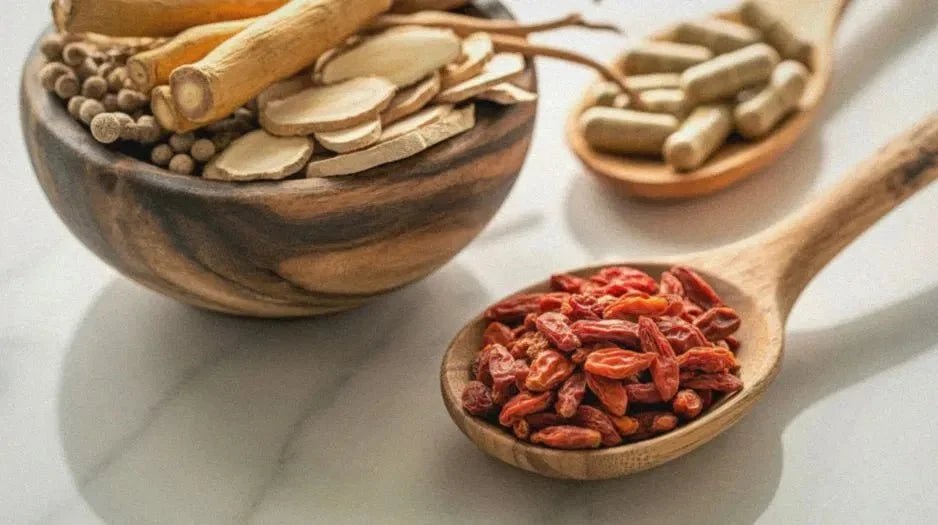
What helps with hot flashes, mood swings, or trouble sleeping? Studies show these plant-based compounds can support you through menopause.
Which supplements are really useful during menopause: from vitamins D, K2, and magnesium to saffron and resveratrol, honestly assessed based on scientific studies.

Recognizing Menopause Symptoms: The 34 Typical Signs from Hot Flashes to Joint Pain, Organized into Five Groups, with the Hormonal Background and What Really Helps You.