

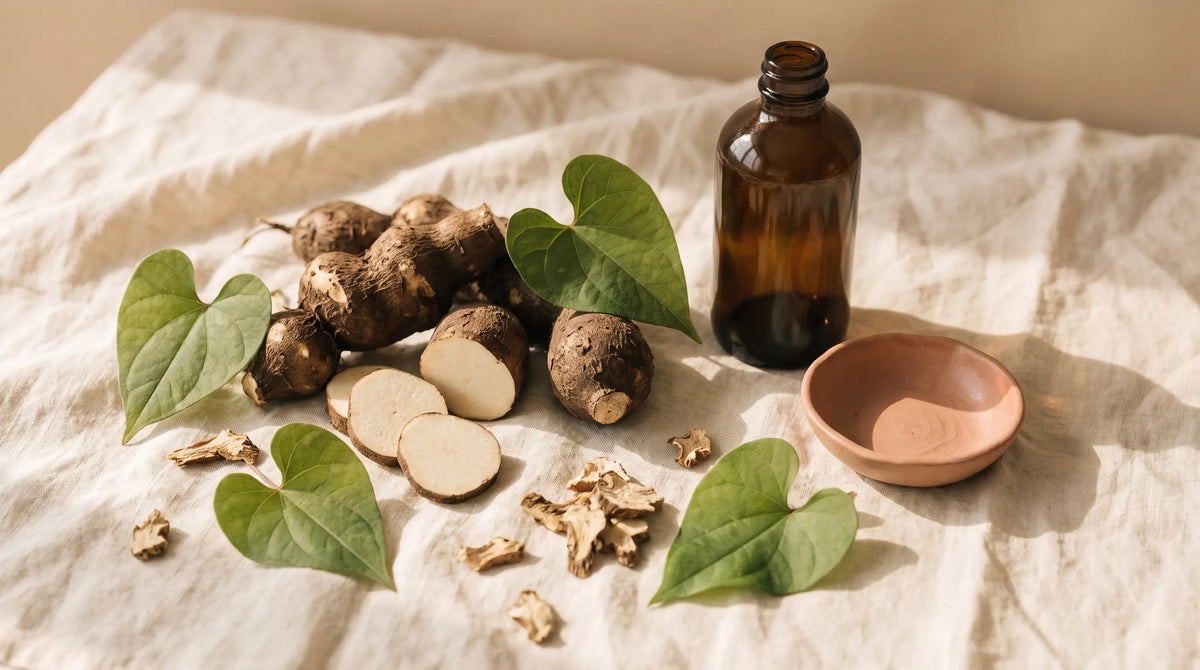
In short: Wild yam (Dioscorea villosa) contains diosgenin, a plant compound that research primarily examines for its roles in inflammation, cellular protection, and metabolism, rather than as hormone replacement. In a 12-month, placebo-controlled study of 50 menopausal women, symptoms decreased significantly more with a yam extract than with a placebo, most notably tension, sleep problems, and muscle and joint pain (Hsu et al., 2011).
The yam root has an image problem, though one different from what you might think. For decades, it was marketed as "natural progesterone." This is incorrect, and because it is incorrect, many experts dismissed the plant entirely. When I worked through the studies for this article, I was surprised by how much had been overlooked.
The effects of the yam root are actually surprisingly versatile in research. In studies, diosgenin dampened inflammatory processes, lowered markers for cellular stress, improved blood lipids and muscle quality, and increased performance in a memory test among healthy adults. And in the longest study to date involving menopausal women, participants using yams felt significantly better after one year than those in the placebo group. In this article, I will show you exactly what the studies observed, how the yam root works, and what you should look for when choosing yam root capsules.
Yam root effects during menopause: What studies show
The most meaningful study on yam root during menopause was a 12-month, placebo-controlled, double-blind trial: women who took a yam extract daily experienced significantly fewer menopausal symptoms by the end than those in the placebo group (Hsu et al., 2011).
Measurements were taken using the Greene Scale, a questionnaire that tracks the physical and psychological symptoms of menopause. The total score decreased significantly more in the yam group. The differences were particularly evident in tension and nervousness, sleep problems, irritability, and muscle and joint pain—exactly the symptoms that burden many women the most during this phase. According to a systematic review, estradiol levels also increased slightly in this study, while the hormone FSH—which typically rises during menopause—decreased (Jing et al., 2026). Liver and kidney values remained unremarkable throughout the year (Hsu et al., 2017).
A second study from Taiwan took a different approach: 22 postmenopausal women replaced two-thirds of their rice intake with yams for 30 days. Afterward, the hormone estrone had increased by 26 percent, the transport protein SHBG by 9.5 percent, and an estrogen metabolite, which is considered a less favorable variant in research, had decreased by 37 percent (Wu et al., 2005). The study had no control group, but it shows that yams can apparently influence hormone metabolism indirectly.
Important for context: The positive human studies used related yam species such as Dioscorea alata, which also contain diosgenin, rather than specifically wild yam. A 2026 systematic review evaluates yams as promising, though it calls for more studies (Jing et al., 2026). I agree with this assessment, with an emphasis on the word promising.
| Study | Participants and duration | Preparation | Observation |
|---|---|---|---|
| Hsu et al., 2011 | 50 menopausal women, 12 months | Extract from Dioscorea alata | Symptoms decreased more than with placebo, especially tension, sleep, and joint pain |
| Iemitsu et al., 2023 | 60 middle-aged adults, 12 weeks | Tablets from D. esculenta | Better muscle quality, lower HbA1c and blood pressure |
| Tohda et al., 2017 | 28 adults, 12 weeks | Extract from D. batatas | Improved memory and cognitive testing |
| Wu et al., 2005 | 22 postmenopausal women, 30 days | Yam as food (D. alata) | Estrone and SHBG increased, cholesterol and cell stress markers decreased |
| Komesaroff et al., 2001 | 23 women, 3 months each | Cream with wild yam (D. villosa) | No difference compared to placebo when used as a cream |
How does the yam root work? Six indirect pathways
The yam root is not a hormone. In studies, it acted on several points simultaneously that become unbalanced during menopause. These indirect pathways explain why such a wide range of areas, from joint pain to memory, improved in the studies.
| Pathway | What was observed | Type of study | Significance in menopause |
|---|---|---|---|
| Inflammation | Fewer inflammatory cells, chemical messengers, and pain responses | Animal studies, including with wild yam | Joint and muscle pain |
| Cellular stress | Cellular stress markers in urine decreased by 42% | Human study, 30 days | Cell protection, blood vessels |
| Blood lipids | Cholesterol and triglycerides decreased, HDL increased | Small human studies | Blood lipids worsen after menopause |
| Muscles and blood sugar | Improved muscle quality, lower HbA1c | RCT with 60 adults | Muscle loss, declining insulin sensitivity |
| Brain | Memory test scores improved by a good 4 points | RCT with 28 adults | Brain fog, concentration |
| Hormone metabolism | Estrone, SHBG, and estradiol slightly higher, FSH lower | Human studies | Transition into menopause |
The strength of the evidence for each pathway varies: there are controlled human studies for muscles, the brain, and menopausal symptoms, while the evidence for inflammation is primarily based on animal data. In the following sections, we will take a closer look at each pathway.
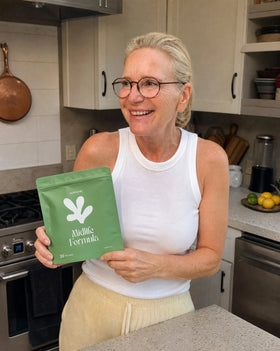
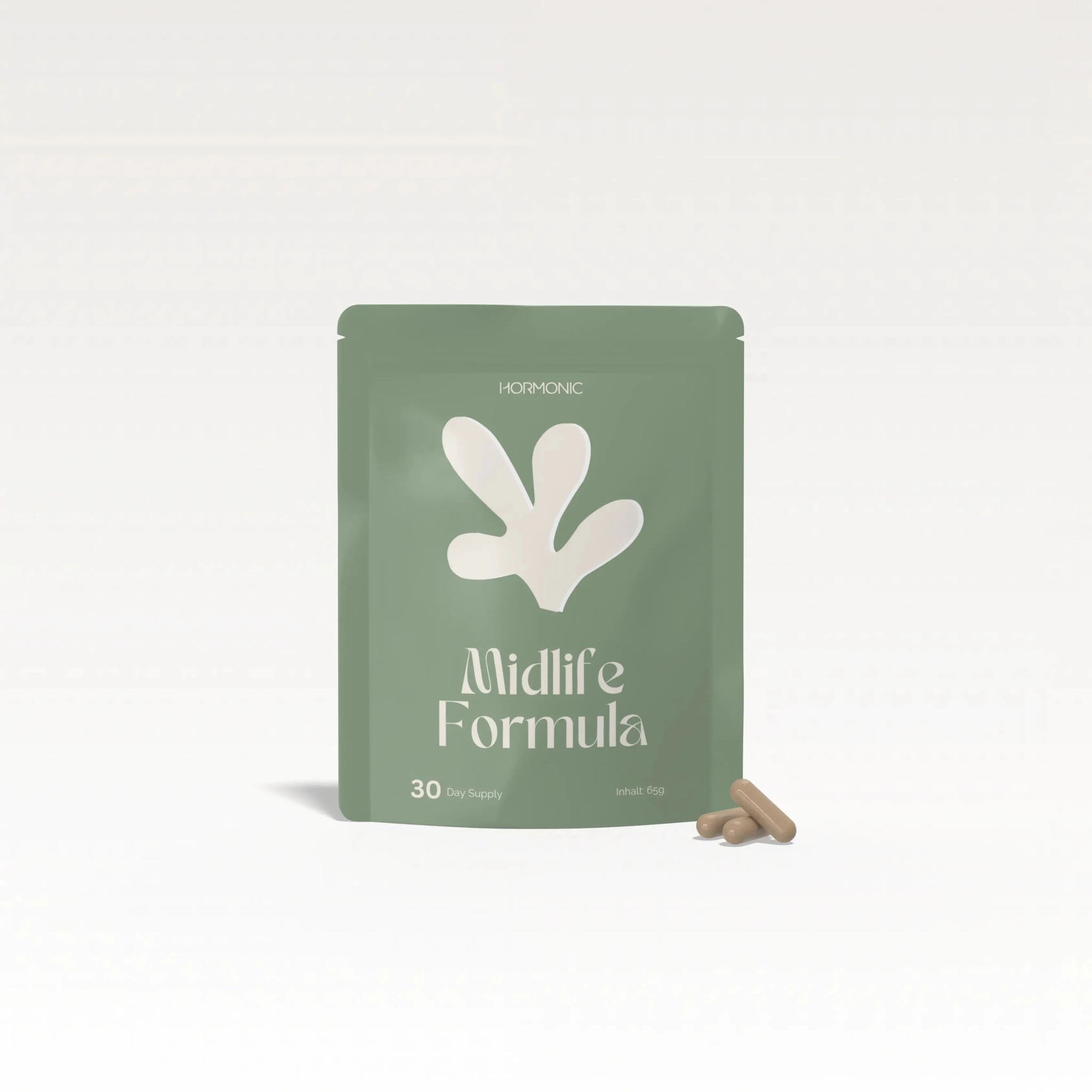
Wild yam plus eight active ingredients: Midlife Formula
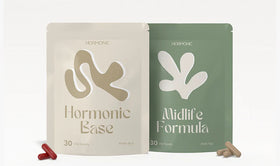
Midlife Formula contains wild yam extract along with red clover isoflavones, saffron, creatine, and five other active ingredients. They target the same areas mentioned in this article: well-being, muscle health, cell protection, and relaxation during midlife. Developed by doctors and manufactured in Austria.
The foundation for this: the Midlife Bundle
In the Midlife Bundle, you combine the Midlife Formula with the Hormonic Base and its 16 micronutrients. This includes, among others, Vitamin B6, which contributes to the regulation of hormonal activity, and magnesium, which contributes to the reduction of tiredness and fatigue. Together, that’s 25 active ingredients in one routine, at a price advantage compared to individual purchases.
Frequently Asked Questions about Wild Yam
Is wild yam progesterone or estrogen?
When should wild yam not be taken?
Hilft Yamswurzel beim Abnehmen?
Wie lange dauert es, bis Yamswurzel wirkt?
Scientific Sources
- Hsu CC, Kuo HC, Chang SY, Wu TC, Huang KE (2011). The assessment of efficacy of Diascorea alata for menopausal symptom treatment in Taiwanese women. Climacteric 14(1):132-139. doi:10.3109/13697137.2010.498594
- Hsu CC, Kuo HC, Huang KE (2017). The effects of phytosterols extracted from Diascorea alata on the antioxidant activity, plasma lipids, and hematological profiles in Taiwanese menopausal women. Nutrients 9(12):1320. doi:10.3390/nu9121320
- Komesaroff PA, Black CV, Cable V, Sudhir K (2001). Effects of wild yam extract on menopausal symptoms, lipids and sex hormones in healthy menopausal women. Climacteric 4(2):144-150. doi:10.1080/cmt.4.2.144.150
- Wu WH, Liu LY, Chung CJ, Jou HJ, Wang TA (2005). Estrogenic effect of yam ingestion in healthy postmenopausal women. J Am Coll Nutr 24(4):235-243. doi:10.1080/07315724.2005.10719470
- Tohda C, Yang X, Matsui M et al. (2017). Diosgenin-rich yam extract enhances cognitive function: a placebo-controlled, randomized, double-blind, crossover study of healthy adults. Nutrients 9(10):1160. doi:10.3390/nu9101160
- Inada Y, Tohda C, Sasabayashi D, Suzuki M (2024). Diosgenin-rich yam extract ameliorates cognitive functions and plasma biomarkers for mild cognitive impairment and mild Alzheimer's disease: a randomized controlled trial. Phytomedicine Plus 4(3):100613. doi:10.1016/j.phyplu.2024.100613
- Iemitsu K, Fujie S, Uchida M et al. (2023). Dioscorea esculenta intake with resistance training improves muscle quantity and quality in healthy middle-aged and older adults: a randomized controlled trial. Nutrients 15(11):2438. doi:10.3390/nu15112438
- Araghiniknam M, Chung S, Nelson-White T, Eskelson C, Watson RR (1996). Antioxidant activity of Dioscorea and dehydroepiandrosterone (DHEA) in older humans. Life Sci 59(11):PL147-157. doi:10.1016/0024-3205(96)00396-7
- Zava DT, Dollbaum CM, Blen M (1998). Estrogen and progestin bioactivity of foods, herbs, and spices. Proc Soc Exp Biol Med 217(3):369-378. doi:10.3181/00379727-217-44247
- Semwal P, Painuli S, Abu-Izneid T et al. (2022). Diosgenin: an updated pharmacological review and therapeutic perspectives. Oxid Med Cell Longev 2022:1035441. doi:10.1155/2022/1035441
- Chen HL, Hong LT, Lee JK, Huang CJ (2009). The bone-protective effect of a Taiwanese yam in ovariectomised female BALB/c mice. J Sci Food Agric 89(3):517-522. doi:10.1002/jsfa.3489
- Wojcikowski K, Wohlmuth H, Johnson DW, Gobe G (2008). Dioscorea villosa (wild yam) induces chronic kidney injury via pro-fibrotic pathways. Food Chem Toxicol 46(9):3122-3131. doi:10.1016/j.fct.2008.06.090
- Lima CM, Lima AK, Melo MG et al. (2013). Bioassay-guided evaluation of Dioscorea villosa: an acute and subchronic toxicity, antinociceptive and anti-inflammatory approach. BMC Complement Altern Med 13:195. doi:10.1186/1472-6882-13-195
- Jing G, Keane CM, Reynolds CM (2026). The effectiveness of non-soy oral herbal supplements for menopausal symptoms: a systematic review. Nutrients 18(13):2037. doi:10.3390/nu18132037
- DGGG, SGGG, OEGGG (2026). S3 Guideline for Peri- and Postmenopause: Diagnostics and Interventions. AWMF registration number 015-062, consultation version.
About the Author

You might also be interested in this.

Red clover isoflavones are one of the most well-studied herbal remedies for hot flashes. What the studies show, which dosage is appropriate, when you should avoid red clover, and how to identify a ...

You can't directly increase progesterone because it only forms after ovulation. What truly supports your ovulation and luteal phase, honestly explained.

Chasteberry works for PMS, and the studies on it are better than its reputation suggests. However, this effect is attributed to a specific extract at a specific dose, not the plant itself. What thi...